How to declutter your home without feeling overwhelmed
There is a particular kind of tired that comes from looking at a cluttered home. Not the tired of a long day, but the quieter, heavier kind that shows up every time you open a drawer that will not quite close, or step around a pile that has been “temporary” for three weeks. If that feeling is familiar, you are not alone, and more importantly, you are not doing anything wrong. Clutter does not build up because someone is messy. It builds up slowly, one small decision deferred at a time, until one day it feels like too much to face at all.
The good news is that decluttering does not have to mean an exhausting weekend of dragging every possession into the middle of the living room. It can start much smaller than that, and it needs to.
Start With a Decision, Not a Room
At its core, decluttering is just a series of small decisions. Keep, let go, keep, let go. The overwhelm rarely comes from the decisions themselves. It comes from trying to make hundreds of them at once, staring down an entire closet or garage as though it all has to be resolved today.
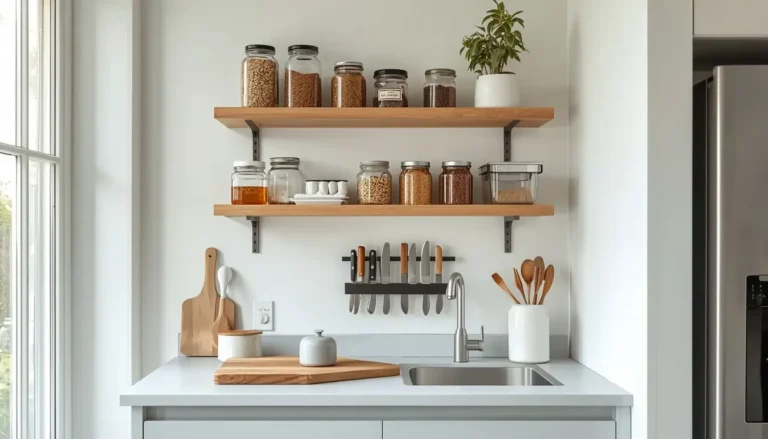
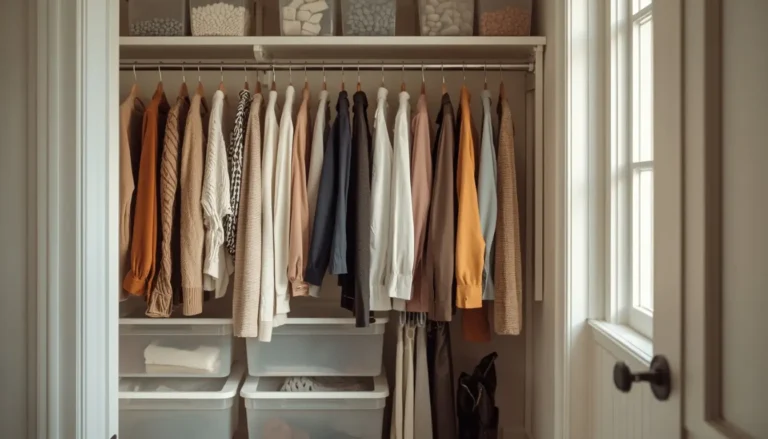
So give yourself permission to shrink the task. Instead of “declutter the bedroom,” try “declutter the top drawer.” Instead of “organize the kitchen,” try “clear one shelf in the pantry.” A single drawer takes ten minutes. A whole room can take a weekend you may not have, and the size mismatch between the two is usually what triggers the overwhelm in the first place.
The Twelve Month Question
When you are unsure whether something belongs, a simple question cuts through most of the hesitation: have you used or worn this in the last twelve months? If the honest answer is no, and it is not something seasonal like holiday decorations or winter gear, it is probably time to let it go.
This is not about being ruthless. It is about being honest with yourself in a low stakes way, one item at a time, rather than agonizing over a decision that rarely matters as much in hindsight as it feels like it will in the moment.
Give Everything a Landing Spot
As you work through a space, set up a few simple sorting zones nearby, even if that just means three cardboard boxes labeled keep, donate, and unsure. Having a physical place for items to go the moment you decide on them keeps momentum going and prevents the half sorted piles that tend to sit around for weeks, quietly adding to the overwhelm rather than reducing it.
The unsure box deserves a small rule of its own. Set it aside, out of sight, and revisit it in a month. If you never once went looking for anything in it, you already have your answer.

Fifteen Minutes Is Enough to Start
You do not need a free Saturday to make real progress. A short, timed session, somewhere around fifteen minutes, is often more effective than a long one, because it feels achievable rather than daunting. Set a timer, pick one small area, and stop when it goes off, even if you want to keep going.
This approach works for a quiet reason. It builds the habit of starting, which is usually the hardest part, without requiring the kind of sustained energy that a full day of decluttering demands. Do this consistently, a few times a week, and the cumulative effect over a month is often larger than a single exhausting weekend would have achieved anyway.
Reduce Paper Before It Piles Up Again
Paper clutter deserves its own mention, since it tends to regenerate faster than almost anything else in a home. Mail, receipts, old bills, and school papers pile up quietly on counters and in drawers, often becoming one of the most stressful categories to face.
Where possible, scan anything you genuinely need to keep and store it digitally in a clearly labeled folder, then recycle the paper original. This single habit prevents an entire category of clutter from rebuilding itself every few weeks.
Let the Feeling of the Room Be Your Guide
It can help to stop measuring progress purely by how much you have removed and start paying attention to how a space actually feels once you walk back into it. Does this room calm you down, or does it still add a small weight to your shoulders when you enter? That feeling is a more honest measure of progress than a strict before and after count ever will be, and it keeps the process anchored in something that actually matters to your day to day life.
There Are No Decluttering Police
If you find yourself spiraling into overwhelm partway through a space, it is completely fine to stop, close the drawer, and walk away. There is no rule that says every project has to be finished the moment it is started, and no one is grading how quickly you get through your closet. Skip whatever is stressing you out today and come back to it another time, when you have more energy for it. You will likely find it far easier the second time around.
Decluttering is not a single event you complete once and never think about again. It is closer to a habit you build gradually, one drawer, one shelf, and one honest decision at a time. Start smaller than feels necessary. It works better than starting big and giving up halfway through.