How to Organize a Closet That Actually Stays Organized
Nearly every closet looks beautiful for exactly two weeks after a big organizing weekend, then slowly slides back into the same pile on the chair it started as. This is not a willpower problem, and it is not evidence that you are simply bad at staying tidy. Closets that genuinely stay organized long-term almost always have a real system behind them, one built around how you actually get dressed rather than good intentions alone, and that distinction changes almost everything about how the space is set up from the very first step.
Start With a Completely Honest Purge
Trying to organize a closet that is still packed to the brim rarely holds up, in the same way painting a wall in the rain rarely dries properly. Take everything out of the closet entirely, down to the empty rod and bare shelves, before deciding what goes back in.
With every item genuinely visible outside the closet, sort honestly into what fits well, what you actually wear, and what genuinely makes you feel good putting on. Anything that fails all three of those tests, a duplicate you forgot you owned, something that has not fit comfortably in over a year, a piece you keep out of guilt rather than affection, is worth letting go of now rather than folding it neatly back into the same overcrowded space.
Design the System Around Your Real Life, Not a Magazine Photo
This is the step most DIY closet projects skip, and it is exactly where a beautiful two-week closet starts to unravel. A parent rushing three kids out the door every morning needs a genuinely different closet setup than someone who works from home in the same three outfits on rotation. Before buying a single bin or organizer, think honestly about how you actually get dressed on a typical day, then build the system around that reality rather than an aspirational version of your mornings.
A common mistake is buying storage containers first and figuring out categories afterward. Flip that order. Decide how you naturally think about your clothes, by color, by season, by work versus weekend, by top versus bottom, and only then choose bins, dividers, or hanging systems that actually support the grouping you already use in your head rather than forcing your clothes to adapt to whatever containers happened to look appealing in a store.
Put What You Reach for Daily Where You Can Actually See It
A closet that stays organized keeps its most frequently used items at eye level and within easy reach, while pieces used only occasionally move to harder to access spots, a high shelf, an under bed drawer, or a less convenient corner. If you cannot see an item easily, you are considerably less likely to remember it exists at all, let alone actually wear it.
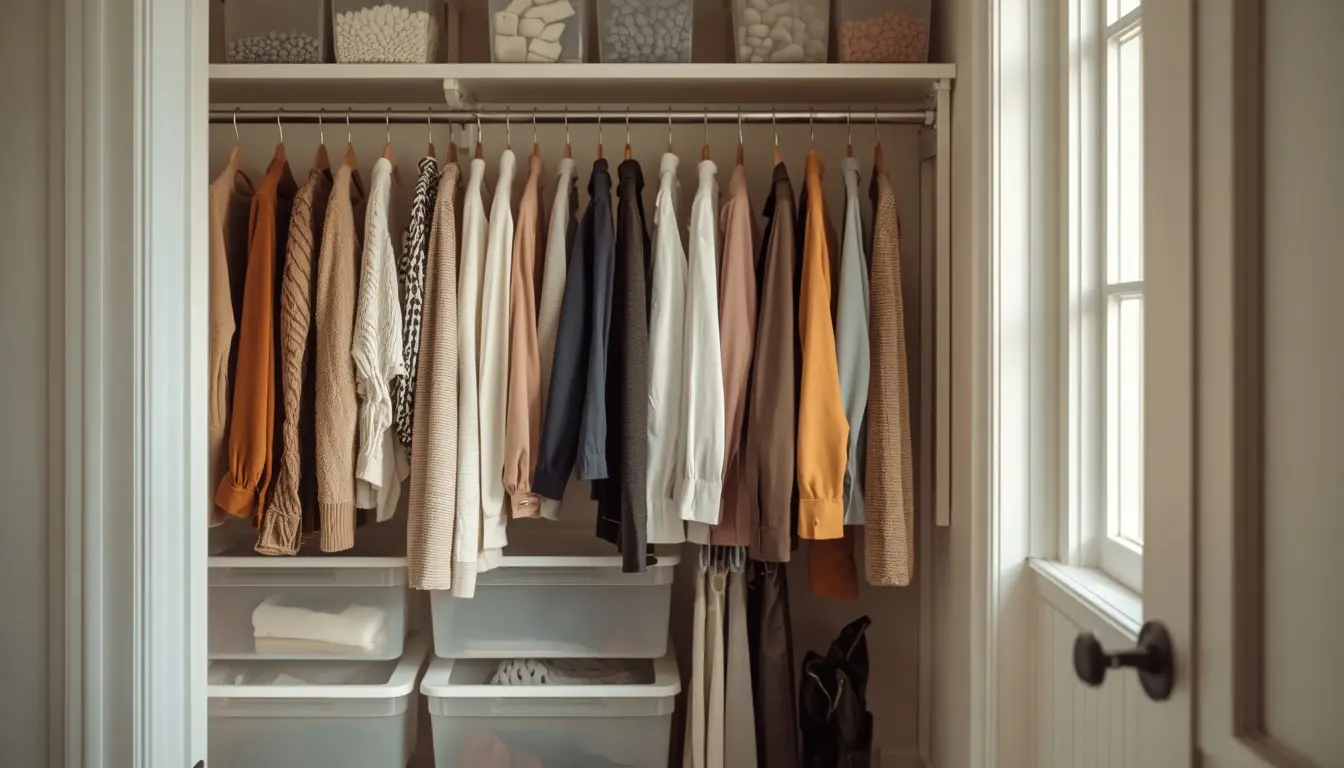
This is part of why open shelving or clear containers tend to outperform opaque bins for anything in regular rotation. Reserve the fully hidden, harder to reach storage specifically for genuinely seasonal items, out of season coats, holiday specific pieces, things you know you will want again in a few months but do not need visible today.
Measure Before You Buy Anything
Before purchasing any organizing tools, take a few minutes to actually measure your closet and take honest stock of what you own in each category. If you own considerably more long dresses than short tops, but your current setup gives equal hanging space to both, no amount of styling the closet will fix that fundamental mismatch. Understanding your actual inventory first prevents the common experience of bringing home a beautiful set of matching bins that simply do not fit what you were trying to organize in the first place.
Choose Hangers and Hooks That Match What You Actually Own
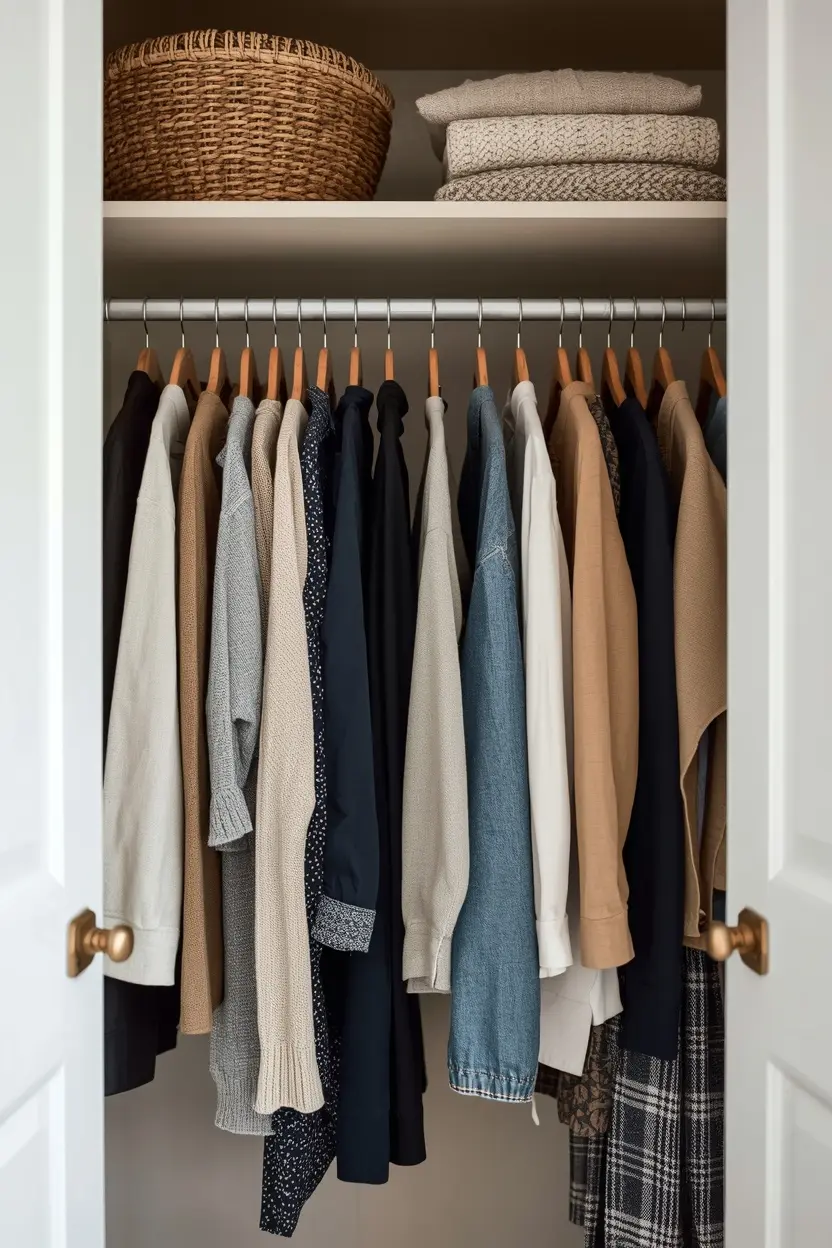
Small details in the physical hardware you choose can quietly undermine an otherwise well designed system. Mismatched hangers of different thicknesses and materials tend to create visual clutter even when the clothes themselves are perfectly organized, while a single consistent hanger style throughout the closet gives the whole space an instantly calmer, more intentional feel. Slimmer, uniform hangers also genuinely free up hanging space compared to a mismatched pile of bulky plastic ones, which matters more than it seems in a closet that always feels slightly too full no matter how much editing you do.
The same logic applies to hooks, bins, and dividers. A closet built from whatever containers happened to be on hand rarely holds together visually or functionally the way one built from a small number of consistent, purposeful pieces does, even when both contain the exact same clothing.
Build a Standing Exit Point Into the Space
A closet stays organized more easily when there is always a clear, easy place for things to leave rather than accumulate. Keeping a small donate bin, or even just a designated bag, inside or near the closet turns letting go of an item into a five second decision rather than a project you postpone indefinitely. Anything you try on and immediately know is not staying goes directly into that bin in the moment, rather than getting refolded back onto a shelf out of habit.
The Habit That Actually Keeps It This Way
The real secret behind a closet that stays organized past the initial “after” photo is a short, recurring reset rather than a single heroic effort. A five minute pass once a week, returning stray items to their spot, pulling out anything that snuck in where it does not belong, noticing which zone is not quite working, keeps a system functional for months in a way that a single deep organizing session on its own never manages. This mirrors the same underlying principle behind decluttering the rest of your home without feeling overwhelmed: small, consistent, low effort maintenance beats waiting for another full scale purge once things have already spiraled back into chaos.
Let the System Evolve as Your Life Does
A closet system that works perfectly today may need small adjustments in six months, as your routine, your job, or even the season shifts around you. This is not a sign the original system failed. It is simply a normal part of maintaining something built around real life rather than a fixed, one time template. Revisiting your zones periodically, especially after a genuinely disruptive stretch like a new job or a move, keeps the system actually matching how you live rather than quietly drifting out of sync with it, one small mismatch at a time until the whole thing feels unfamiliar again.
Frequently Asked Questions
How long does it actually take to organize a closet properly?
A full purge and reset typically takes a focused weekend for most closets, though the ongoing weekly five minute reset is what determines whether that initial effort actually lasts.
Should I organize my closet by color or by category?
There is no universally correct answer. The right grouping is whichever one matches how you naturally think about your clothes and actually get dressed, whether that is color, occasion, or garment type.
What is the biggest reason closet organization systems fail?
Most systems fail because they were designed around an idealized routine rather than how the person actually lives day to day, which means maintaining them requires constant willpower rather than happening naturally.
Do I need expensive organizers to keep a closet tidy long term?
No. The underlying system, honest editing, sensible zones, and a regular small reset, matters far more than the specific bins or hangers used to execute it, though a consistent, uniform hanger style does make the finished space feel noticeably calmer.