How to Use Points and Miles for Your First Free Flight
A free flight paid for entirely with points feels like a small magic trick the first time you actually book one. It is not magic at all, though. It is a loyalty system that airlines, hotels, and banks built specifically to reward spending, and understanding the basic mechanics behind it is really all that separates someone earning their first flight from someone who assumes the whole thing is too complicated to bother with in the first place.
What Points and Miles Actually Are
Points and miles are both forms of loyalty currency, earned through spending and redeemed later for travel rather than cash. The terminology varies slightly depending on the source: airline programs typically call their currency miles, while banks and hotel programs more often call theirs points. Functionally, both work the same way, accumulating in an account until you have enough to redeem for a flight, a hotel stay, or occasionally another travel-related reward.
There are two broad categories worth understanding before you start.
Program-specific miles or points are earned directly through one particular airline’s or hotel’s own loyalty program. These generally need to be redeemed with that same company, or occasionally with a close airline alliance partner, which limits your flexibility somewhat.
Transferable rewards points, earned through a general-purpose rewards credit card rather than a single airline or hotel card, can be moved into several different airline and hotel partner programs depending on where you actually want to travel. This flexibility is exactly why most beginners are steered toward this category first, since it avoids getting locked into a single airline’s route network before you know which programs actually work best for your specific travel plans.
How You Actually Earn a Meaningful Balance
Everyday spending on a rewards card earns a modest number of points per dollar, and while this adds up over time, it is rarely the fastest route to your first free flight on its own.
The single biggest lever for a beginner is a welcome bonus, a lump sum of points many rewards cards offer to new cardholders who spend a specified amount within a set window, often the first three months after opening the account. This one time bonus frequently dwarfs what months or even years of regular everyday spending would earn on its own, which is exactly why it gets so much attention in the points and miles community.
The key principle to keep in mind here is redirecting spending you were already going to make, groceries, gas, regular bills, onto the rewards card, rather than spending more than you normally would purely to chase the bonus. Treating a welcome bonus as an excuse to overspend defeats the entire purpose, since any interest charges from carrying a balance will erase far more value than the points themselves are worth.
Understanding Roughly What Your Points Are Worth
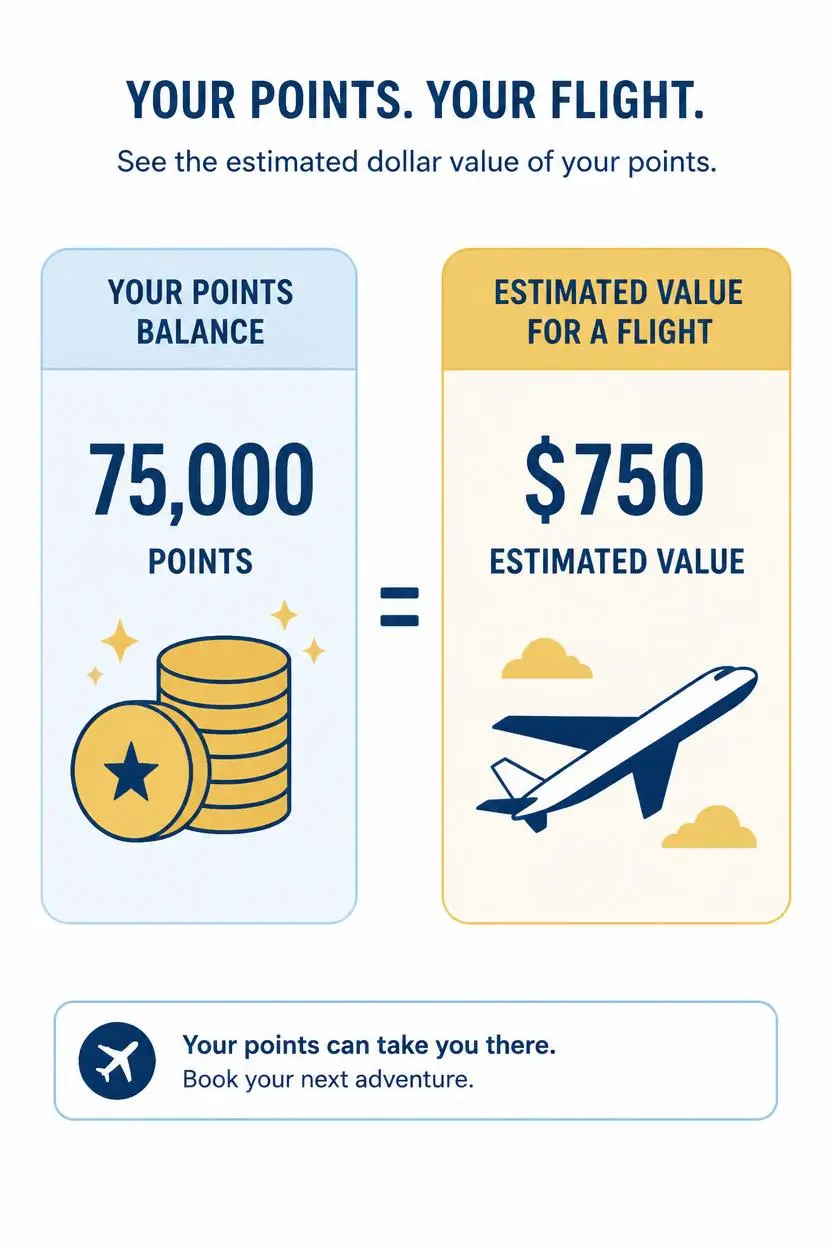
Point values vary considerably between programs, but a simple illustrative way to think about it is imagining each point or mile as worth somewhere in the neighborhood of one cent, though the real value can swing meaningfully higher or lower depending on the specific program and how you redeem it. Under that rough illustration, a balance of fifty thousand points might realistically cover a flight valued around five hundred dollars, though this is a general approximation rather than a fixed rate that applies universally across every program.
This is also why transferring points to book an actual flight, rather than redeeming through a card issuer’s built in travel portal at a flat, fixed rate, often produces meaningfully more value once you understand how a specific airline partner prices its award flights.
A Realistic Starting Process
If you are beginning from zero, a few sequential steps make the whole process considerably less overwhelming.
- First, get a general sense of where you actually want to travel, since this shapes which type of points make the most sense to prioritize rather than earning currency you may never have a practical way to use.
- Second, check your own credit standing honestly before applying for anything. Most travel rewards cards require good to excellent credit, and applying without understanding where you stand can result in a rejected application, which itself carries a small, temporary impact on your credit profile.
- Third, choose a flexible, transferable rewards card as your starting point rather than a card tied to one specific airline, since this keeps your options open while you are still learning how the broader system actually works and which specific partner programs eventually suit your travel style best.
- Fourth, meet the minimum spending requirement using your genuinely existing monthly expenses, then pay the full statement balance every single month without any exception, since carrying a balance at typical rewards card interest rates will cost you far more than the points you earn are actually worth.
Finally, once your bonus has posted, research how to transfer or redeem those points toward an actual flight for the destination you identified in the first step, since the redemption process itself, checking award availability and transfer ratios, is where a lot of the real value in this whole system gets unlocked.
Points Are One Tool Among Several
It is worth remembering that points and miles are just one lever in a broader toolkit for traveling well without paying full price every time. The same underlying instinct, looking for value that exists outside the sticker price, connects directly to strategies like accessing upgrades and loyalty perks covered in how to get luxury travel experiences without paying full price, since both approaches rely on understanding how a rewards system actually works rather than simply paying whatever the first quoted price happens to be.
Mistakes Worth Avoiding as a Beginner
A few missteps show up repeatedly among people just starting out. Overspending specifically to chase a welcome bonus, rather than redirecting spending you would have made anyway, is the most common and most costly one. Letting a card sit unused after earning its bonus, without any plan for ongoing value, is another, since some cards carry an annual fee that only makes sense if you are actually using the card’s other benefits. Closing a card too early, within the first year in particular, can also affect your credit profile, so it is worth understanding a card’s annual fee and benefits fully before deciding whether to keep it or eventually close it.