How to Create a Cozy Reading Corner at Home
A reading corner is less about furniture than about permission. It is a small, visible promise that you are allowed to stop, sit down, and spend time with a book, away from the laundry, the notifications, and the long list of things that always seem more urgent. The good news is that a reading corner does not need a spare room, a built-in window seat, or a big budget. A comfortable seat, a good light, and a spot to put your tea are enough to begin, and a few soft touches turn that into a place you will actually look forward to. This guide walks you through the five ingredients, shows how to fit one into almost any home, and ends with a few thoughts on making the habit stay.
Start by Choosing the Spot
The best place for a reading corner is somewhere quiet, with little foot traffic, where you are unlikely to be interrupted every few minutes. A spot near a window is ideal, since daylight is gentle on the eyes and makes the space feel open. If you are not sure where to put it, think about where you already like to sit. Corners of bedrooms, the end of a hallway, a landing, the space beside a bookshelf, or a gap behind a sofa can all become a nook with a little care.
Before you buy anything, measure the space, and check that the chair and a small table will fit without blocking a doorway or a path. It also helps to spend a few days noticing how the light changes across the day, so that you can choose a spot that works for both morning and evening reading.
Five Ingredients of a Reading Corner
Almost every good reading spot, from a grand library nook to a corner of a studio flat, is built from the same five ingredients. You can add them one at a time, and you do not need to get them all at once.
A Seat That Supports You
Comfort is what keeps you in the chair, so start here. Choose something with good back support and a seat that suits your height, whether it is an armchair, a small sofa, a bench with cushions, or a sturdy floor cushion against a wall. A good rule of thumb is to test a seat in person by sitting in it with a book for about fifteen minutes, since a chair that looks lovely can be uncomfortable once you stay put. A small cushion at the base of your spine, and a footstool or ottoman to raise your feet, make a big difference to how long you can read without getting stiff. Very soft or collapsing seats, such as a bean bag with no structure, tend to feel nice for ten minutes and tiring after that.
Light You Can Read By
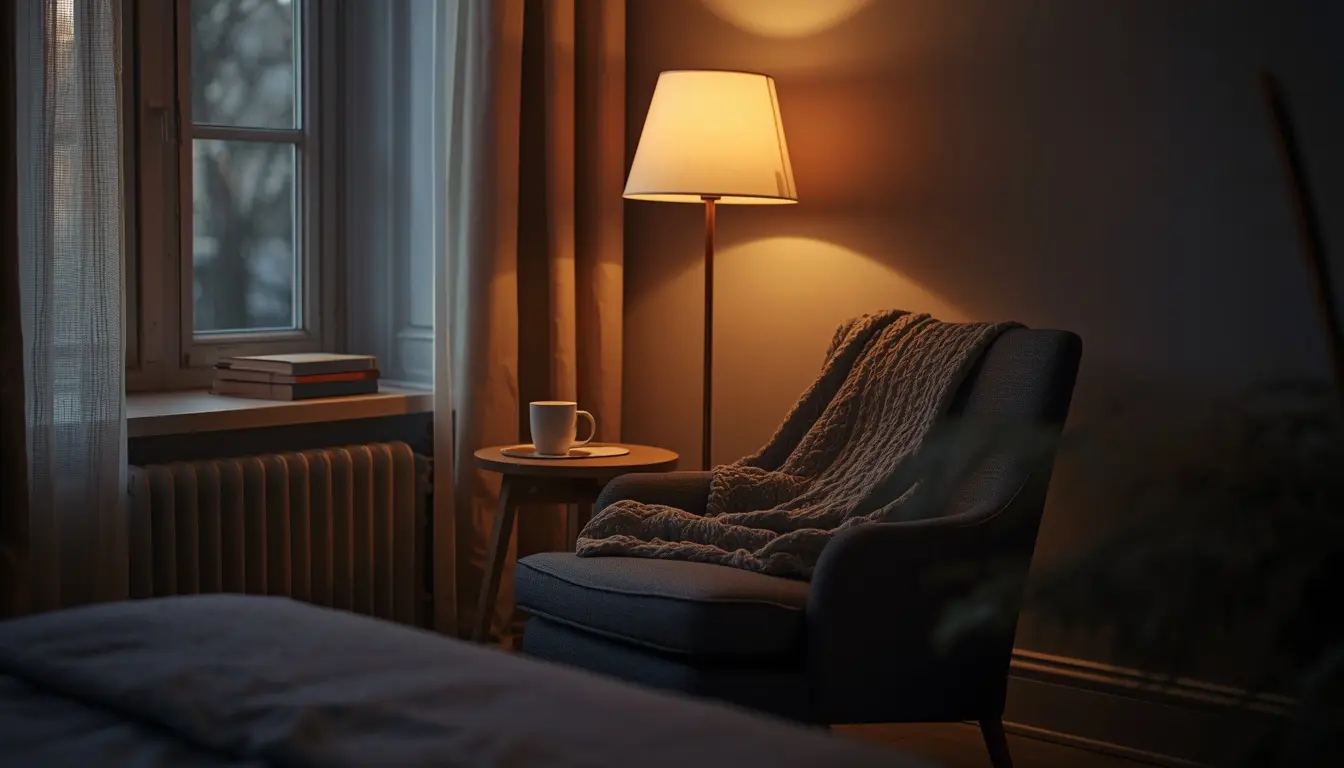
Good lighting turns a corner into a reading corner. A single overhead light is rarely enough, since it casts shadows and can cause glare on the page. A better approach is layered lighting, with two kinds of light working together. The first is ambient light, which gently brightens the whole area, such as a ceiling light on a dimmer, a soft table lamp, or string lights. The second is task light, which is focused on your book, for example an adjustable floor lamp, a wall mounted swing arm light, or a small clip on lamp placed over your shoulder so that it does not shine into your eyes.
Choose warm white bulbs, which create a relaxing atmosphere, and position the lamp so that you do not see the bulb directly or a glare on the paper. If your corner has a window, make the most of daylight, and use a sheer curtain to soften harsh direct sun. Eye care professionals generally note that reading in dim light can cause tired eyes and temporary strain, though it is not thought to cause lasting damage, so enough light is mostly about comfort.
A Surface Within Reach
You will want somewhere to put a mug, your glasses, and a bookmark. A small side table, a stool, a tray on a pouf, or a narrow shelf beside the seat does the job. Keep it uncluttered, with space for only the things you need while you read. If your corner is very tight, a wall mounted shelf at arm height or a table that clips onto a bed frame can be a good alternative.
Softness and Texture
This is where the cozy feeling comes from. Add a throw blanket for cold evenings, a couple of cushions for support and comfort, and a small rug to anchor the space and make the floor feel warm underfoot. Choose fabrics that feel pleasant and that you can wash, such as cotton, wool, or knits, and swap them with the seasons. Lighter textures suit summer, and heavier ones come out in winter.
Books and Storage Close By
Keep the books you are reading, or want to read soon, within arm’s reach. A small bookshelf, a basket, a stack on a side table, or a narrow ledge works well. It is better to keep a modest selection of books you are excited about than to cram in every book you own, since a crowded shelf feels like a chore. Rotate your selection now and then, and keep the rest elsewhere. A basket beside the chair can also hold a spare blanket, a notebook, and reading glasses.
Reading Corners for Small Spaces
You do not need to give up a whole room. Here are some ideas for fitting a reading spot into different parts of a home.
| Where | The idea | Keep in mind |
|---|---|---|
| A bedroom corner | A small armchair, a floor lamp, and a narrow side table | Choose calm colors, and keep it from becoming a place to dump clothes |
| A window ledge or bench | A cushioned window seat with a throw and a clip on lamp | Check that it is deep enough to sit on comfortably, and watch for drafts |
| An alcove or under the stairs | A floor cushion, a small shelf, and a wall light | Make sure that there is enough headroom and airflow |
| Behind a sofa | A hidden nook with a slim chair and a lamp | Leave enough room to move around |
| A shared living room | One chair by the bookshelf with a lamp and a footstool | Add a basket to put things away so the space stays tidy |
| A rented home | Floor cushions, a plug in lamp, and freestanding shelves | Avoid anything that needs drilling, unless it is allowed |
If you are choosing furniture, the approach in creating a capsule home decor style can help you pick a few versatile pieces that suit the whole room instead of just the corner.
Budget Friendly Ways to Build One
A reading corner can be made with very little spending. Look at what you already own first, and consider moving a comfortable chair from another room, using a lamp from a different space, or repurposing a small table. Secondhand shops and online marketplaces often have solid armchairs and side tables at a fraction of the price of new ones. A thrifted chair with a new cushion, a throw from home, and a lamp can be put together for very little. Borrow books from a library, and use a swap shelf to keep the selection fresh. If clutter is an issue in the area you have chosen, decluttering your home without feeling overwhelmed shows how to clear a corner gently.
Colors, Mood, and Calm
The colors around you affect how a space feels, though the effect is personal, and what feels calming to one person may not to another. Soft, muted tones are popular for reading corners because they are restful, but a deeper shade can make a nook feel wonderfully enclosed. Think about how the colors work with the rest of the room. The approach in choosing a color palette for your home explains how to keep a corner consistent with the rest of the space. A small plant, a framed print, or a favorite object adds a personal touch without clutter.
A Few Safety Notes
- Keep cords tidy. Run lamp cables along the wall or use a cord cover so that nobody trips over them.
- Mind the bulbs. Keep hot bulbs and lamps away from blankets, curtains, and cushions.
- Be careful with candles. If you enjoy them, keep them well away from throws and paper, and never leave them burning when you are not there.
- Anchor tall shelves. Fix bookcases to the wall, particularly if children or pets are around.
- Make sure lamps are stable, and that nothing blocks a heater or vent.
Keep It Distraction Free
The point of a reading corner is a break from the noise, so protect it. Keep your phone in another room or on silent, face down and out of reach. Avoid turning the corner into a spot for scrolling, and treat it as a screen free zone, if you can. If you find it hard to put your phone down, the strategies in reducing screen time without losing productivity offer practical ways to make it easier.
Make It a Place You Actually Use
A beautiful corner that nobody sits in is just furniture. The most important step is to use it, and the simplest way is to start small. Aim for ten minutes a day, not an hour, and attach it to something you already do, such as reading after dinner or before bed, an idea that works well alongside habit stacking. Leave the book you are reading on the side table, with a bookmark in it, so that opening it takes no effort at all. Let the corner change with you, adding a new cushion, swapping the books, or moving the lamp, until it feels like yours. And on days when you cannot read at all, simply sit there for a few minutes with your tea. A cozy corner is not only for finishing books. It is a place to slow down, and everyone deserves one.