How to Organize Your Pantry for Easy Meal Prep
A pantry that works for you is not about looking picture perfect. It is about opening the door at six in the evening and immediately seeing exactly what you have to work with, rather than digging through a jumble of half used bags and boxes hoping something useful turns up. A genuinely organized pantry turns meal prep from a small daily negotiation into something considerably more automatic.
Start With a Complete Reset
Before organizing anything, take everything out of the pantry entirely. Wipe down the shelves, and honestly sort through what comes back out, checking expiration dates and letting go of anything stale, duplicated, or quietly forgotten in the back corner for longer than you would like to admit. Starting from this genuinely clean slate makes every step after it considerably more effective than trying to organize around clutter still sitting in place.
Build Zones Around How You Actually Cook
Group by Category First
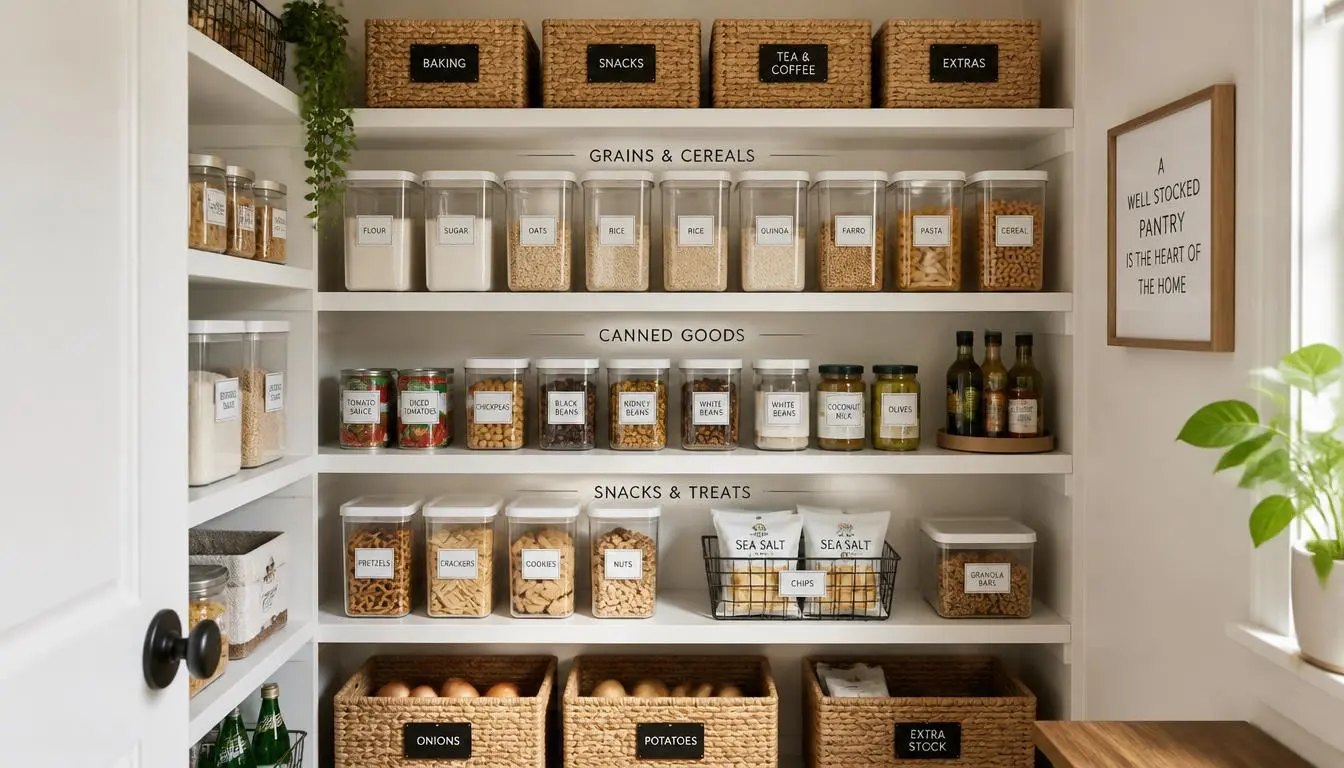
Sort your returning items into clear categories rather than placing them back wherever there happens to be space. Breakfast items together, baking supplies together, grains and pasta together, canned goods together, snacks together. This single shift, from scattered placement to deliberate grouping, is the foundation everything else in this guide builds on.
Add a Dedicated Quick Meal Zone
Beyond basic categories, consider a zone built specifically around the meals you cook most often, keeping every staple ingredient for your go to weeknight dinners grouped together in one place. On a night when energy is low and motivation is lower, having everything for that reliable meal sitting together in one spot removes an entire layer of decision making you simply do not have the bandwidth for at that moment.
Place Frequency Before Everything Else
Once your zones exist, prioritize their physical placement by how often you actually reach for them. The items you use daily or near daily deserve eye level, easy reach shelves. Items you reach for only occasionally, specialty baking supplies, holiday specific ingredients, belong on higher or lower shelves that require a bit more effort to access. This single adjustment does more for everyday convenience than almost anything else in this entire process.
Choose Containers That Actually Earn Their Space
Clear, uniform containers do two genuine jobs at once. They let you see exactly what you have and roughly how much is left without opening anything, and their consistent shape and size make considerably better use of your available shelf space than a mismatched collection of original packaging ever could. Favor containers with a secure, airtight seal for anything prone to going stale or attracting pests, grains, cereals, flour, dried fruit, and choose stackable options wherever your shelf height allows, since vertical space is often the most underused resource in a pantry of any size.
Label Everything, Even the Obvious Items
A consistent labeling system does more real work than it gets credit for, particularly once you have transferred several items into matching clear containers that no longer show an original product label. Removable, updatable labels work well here, since pantry contents genuinely shift over time and a rigid, permanent label becomes its own small source of frustration the moment you switch to a different brand or product. Where it is genuinely useful, adding the approximate expiration date alongside the contents helps you rotate stock naturally rather than discovering something expired months after the fact.
Corral the Small, Loose Items
Nuts, seeds, small spice packets, and other loose odds and ends tend to scatter and clutter even a well organized pantry if they are each left to sit on their own. Gathering these smaller items into a single labeled bin or basket keeps them from quietly undoing the tidiness of the zones around them, and it means you know exactly where to look the moment a recipe calls for something easy to misplace.
Measure Before You Buy a Single Container
It is tempting to buy a full matching set of containers before you have actually assessed your specific shelves and your real inventory. Take a few minutes to measure your available shelf height and depth, and take honest stock of what you actually own in each category, before purchasing anything. This single step prevents the common, frustrating experience of bringing home a beautiful set of containers that simply do not fit the space or the quantities you were actually trying to organize. The same underlying discipline shows up in saving money on groceries without sacrificing quality, where understanding what you actually need and use consistently outperforms buying based on instinct alone.
Treat It as an Ongoing Habit, Not a One Time Project
A pantry organized once and never revisited slowly drifts back toward clutter as grocery habits and household needs shift over time. A brief check in every few weeks, returning stray items to their zone, noticing what is running low, rotating anything approaching its expiration date, keeps the system genuinely functional for the long run rather than becoming another ambitious weekend project that quietly unravels within a month.
What a Well Organized Pantry Actually Gives You Back
The real payoff here shows up on an ordinary Tuesday evening, not in how the pantry photographs. Knowing exactly what you have, exactly where it lives, and exactly how much is left turns meal prep into something closer to automatic, removes a genuine source of daily friction, and quietly makes it easier to actually cook the meals you planned rather than defaulting to takeout simply because finding what you needed felt like too much effort.