A First-Timer’s Guide to Planning a Trip to a New City
Every experienced traveler once stared at a blank itinerary for their first city trip, unsure where to start. The good news is that planning a trip to a new city follows a fairly predictable order once you know it, and most of the anxiety around it comes from trying to figure everything out at once instead of working through it step by step.
Pick Your Neighborhood Before Anything Else
The single decision that shapes everything else about your trip is where you actually stay. This matters more than most first-time travelers expect, since your neighborhood becomes your temporary home base for every day of the trip.
For a first visit, prioritize a central location with strong public transit connections over a slightly cheaper option farther out. The savings rarely outweigh the extra time spent commuting, especially when you are unfamiliar with the city’s layout and transit system. Book this early too. The best-located, well-reviewed options tend to sell out or get expensive as the date gets closer, so locking this in first gives you both a better location and a better price.
Be Honest About How Much You Can Actually See
New travelers consistently make the same mistake: trying to fit an entire city into a few days. You will not see everything on your first visit, and accepting that early actually makes for a better trip, not a worse one. Trying to force it in usually means rushing through everything and enjoying none of it.
A more realistic approach is listing the places you genuinely want to see, then being selective rather than comprehensive. If your list feels long, that is normal. It simply means you have found a good reason to return.
Group Your Days by Location, Not by Interest
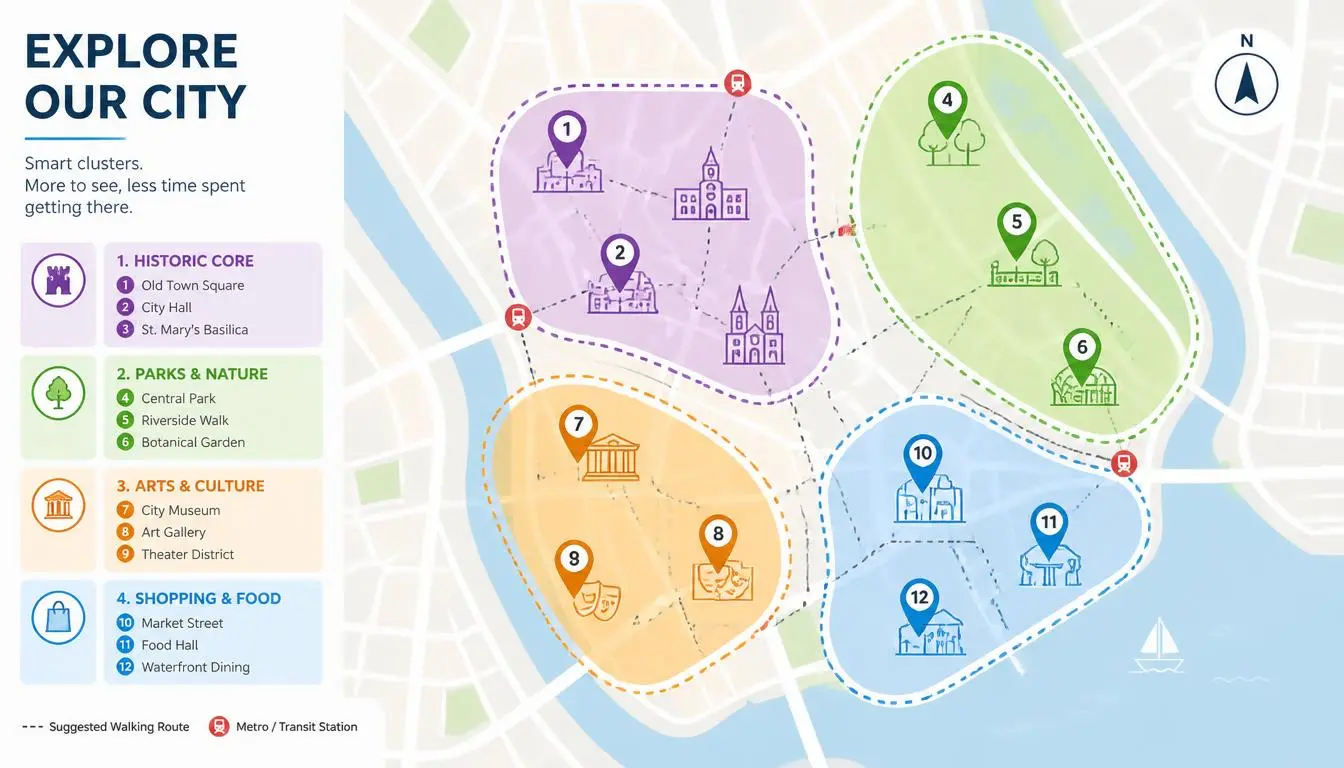
One of the most common planning mistakes is organizing an itinerary by category, museums one day, food the next, landmarks after that, without considering where any of it actually sits on a map. This tends to mean crossing the entire city back and forth multiple times a day, wasting hours on transit that could have gone toward actually experiencing the place.
Instead, group your must see sights by neighborhood or region, and tackle two or three nearby locations in a single day. This single planning shift saves more time than almost anything else on this list, and it usually means less exhaustion by day three.
Learn the Transit System Before You Land
Every city handles public transportation a little differently, and figuring it out on arrival, tired and carrying luggage, is a rough way to start a trip. Before you leave, spend a few minutes researching how the local metro or bus system works: whether tickets are paper, card based, or app based, and roughly what a single ride or a day pass costs.
This small bit of preparation removes one of the most common sources of first day stress, and it means you can move through the city with some confidence from the moment you arrive rather than needing an afternoon just to figure out how to get anywhere.
Download Offline Maps Before You Land
Internet access is not always reliable the moment you step off a plane or train, particularly if your phone plan does not include international data. Download offline maps for your destination before you leave, so navigation works even without a connection. This single habit solves a surprising number of first day navigation headaches.
Leave Room for Nothing in Particular
An itinerary packed solid from morning to night sounds productive, but it rarely holds up against reality. Flights get delayed, weather shifts, feet get tired faster than expected, and sometimes the best moment of a trip is one that was never on the list at all.
Build in some unscheduled time, even just a few hours here and there, where the only plan is to walk without a destination. Some of the most memorable finds on any trip, a good bakery, an interesting side street, a small neighborhood park, tend to show up during exactly this kind of unplanned wandering rather than on a curated must see list.
Pack Lighter Than Feels Necessary
Overpacking is one of the most consistent first time traveler mistakes, and it tends to cause more friction than almost anything else once the trip is underway. Heavy luggage makes airports, transit systems, and simple walking through a new city noticeably more exhausting than it needs to be.
Pack versatile clothing that mixes and matches easily, check the actual weather forecast rather than a general seasonal guess, and prioritize comfortable shoes over stylish ones. You will be walking more than you expect on a first city trip, and your feet will thank you by day two.
Keep Someone Back Home in the Loop
Before you leave, share your general itinerary and accommodation details with a friend or family member, and get into the habit of checking in periodically, even something as simple as a message before bed each night. This is a small habit that costs almost nothing and provides real peace of mind, both for you and for the people who care about where you are.
Give Yourself Permission to Get It a Little Wrong
Your first trip to a new city does not need to run perfectly to count as a success. Delays happen, plans shift, and small mistakes are simply part of traveling rather than a sign that something went wrong with your preparation. Prepare thoughtfully using the steps above, then stay flexible enough to let the trip actually unfold, rather than forcing it to match a plan made weeks in advance from a place you had never visited yet.