How to Start an Emergency Fund From Scratch
A surprise car repair, a medical bill, or a sudden job loss will not check your calendar first. What determines whether that moment becomes a manageable inconvenience or a genuine financial crisis is often just one thing: whether a cash cushion already exists to absorb the impact. Building an emergency fund from zero is entirely realistic, even on a modest or irregular income, as long as you approach it in the right order.
What an Emergency Fund Actually Is
An emergency fund is a cash reserve set aside specifically for urgent, unplanned expenses, things like a job loss, a medical bill, a car repair, or an essential home fix. It is deliberately not meant for discretionary spending, and it is not an investment. Its entire job is to be boring, safe, and immediately accessible when something goes wrong, which is a very different goal from trying to grow wealth.
This distinction matters because it shapes every decision that follows, particularly where the money should actually be kept.
How Much You Actually Need
The standard guideline from financial planners is to save three to six months of essential living expenses, calculated from your expenses, not your income. Essential expenses typically include rent or mortgage payments, utilities, groceries, transportation, insurance, and minimum debt payments, rather than every category in your regular budget.
Where you land within that three to six month range depends on your specific situation.
Three months tends to fit a dual-income household, a stable job such as government work, relatively low fixed expenses, or a strong support system to fall back on if needed.
Six months or more tends to fit better if you are the sole earner in your household, have variable or freelance income, are supporting dependents, or are managing an ongoing health condition that could affect your ability to earn.
To turn this guideline into an actual number, add up your essential monthly expenses, then multiply that total by whichever number of months fits your situation. As a simple illustration, monthly essential expenses of roughly 2,500 dollars would translate to a target of about 15,000 dollars at the six month mark, though your own specific number will depend entirely on your own expenses and circumstances.
Start Smaller Than the Full Goal
A full three to six month target can feel genuinely overwhelming when you are starting from zero, and that overwhelm is a common reason people put off starting entirely. A more realistic first milestone is a smaller starter goal, often framed as roughly 1,000 dollars, or one month of essential expenses if that figure is lower for your situation.
This smaller target matters for a specific reason beyond motivation. A modest starter fund is often enough to cover the most common minor emergencies, a car repair, a smaller medical bill, without needing to reach for a credit card. That alone breaks a cycle that traps a lot of households: no emergency fund, an unexpected expense, high interest credit card debt, and a growing balance that becomes harder to pay down over time. Building the full three to six month fund can then continue afterward, once that first protective layer already exists.
Where to Actually Keep the Money
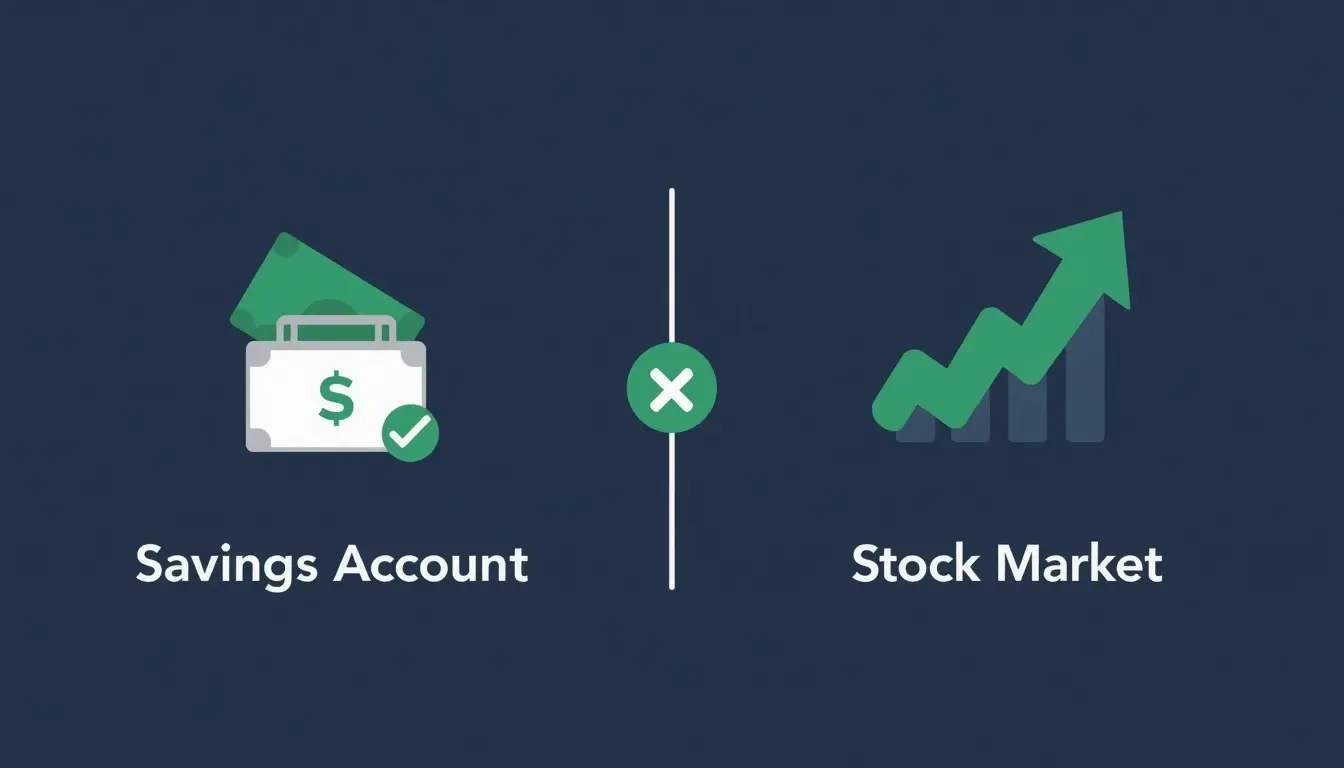
Where you store an emergency fund matters nearly as much as how much you save. The consistent recommendation across financial institutions is a separate account from your everyday checking, specifically a high-yield savings account, which offers safety, quick accessibility when needed, and modest interest growth in the meantime.
A few options are worth deliberately avoiding here. Investing an emergency fund in stocks, cryptocurrency, or even bonds introduces real risk of the balance dropping right when you need to access it, which defeats the entire purpose of the fund. Keeping it as physical cash at home avoids market risk but introduces a different problem, since cash loses purchasing power to inflation over time and carries a real risk of loss or theft. A dedicated, separate savings account remains the most consistently recommended middle ground.
The Habit That Actually Makes This Work
Most people who successfully build an emergency fund rely on the same underlying mechanism: automating the process rather than relying on remembering to transfer money manually each month. Setting up an automatic transfer from checking to your emergency savings account, timed to land right after each payday, removes the decision entirely from your day to day awareness. Money that never sits visibly in checking is money you are far less likely to spend before it reaches savings.
Beyond your regular automatic transfers, redirecting windfalls, a tax refund, a work bonus, gift money, or income from a side project, directly into the fund accelerates progress considerably without requiring any change to your regular monthly budget at all. If building a simple monthly budget is still a work in progress for you, setting up this one automatic transfer is a reasonable place to start even before the rest of your budget is fully mapped out.
What Actually Counts as an Emergency
It is worth defining this clearly before the fund exists, since the line can blur once real money is sitting there. Genuine emergencies include job loss, medical bills, a car breakdown affecting your ability to work or get around, and essential home repairs that cannot reasonably wait. A sale on something you want, a vacation opportunity, or a planned but non essential purchase does not qualify, regardless of how good the timing feels in the moment.
If you do need to use the fund for a genuine emergency, treat rebuilding it back to its target as a priority once the immediate situation has passed, rather than treating the reduced balance as a new normal.
Track Progress Without Making It Feel Like Deprivation
Watching a balance grow slowly from automatic transfers alone can feel abstract, which is part of why some people lose motivation partway through. Checking in on the account once a month, rather than daily, tends to strike a better balance between staying aware of progress and avoiding the kind of constant monitoring that makes saving feel like a burden rather than a background habit. Small, visible milestones, reaching the first 500 dollars, then the full starter fund, then each additional month of coverage, can make an otherwise slow process feel more concrete along the way.
It is also worth remembering that an emergency fund is not meant to feel restrictive the way a strict spending freeze might. Because contributions are automated and sized to what you can realistically sustain, the rest of your regular budget continues largely unaffected, which is precisely what makes this approach durable over months and years rather than something abandoned after the first difficult week.
FAQ’s
Should I pay off debt before building an emergency fund?
A common approach is building a smaller starter fund first, often around 1,000 dollars, then shifting focus toward aggressively paying down high interest debt, before returning to build out the full three to six month emergency fund. This sequence provides some initial protection while still prioritizing debt that is actively costing you money in interest.
Can I just use a credit card as my emergency fund instead?
A credit card is debt, not savings, and relying on one during a genuine emergency simply shifts the crisis into a new one involving interest charges and a growing balance. An emergency fund is meant to be your own money, available without adding new debt on top of an already difficult situation.
Is it okay to keep my emergency fund in cash at home?
It is generally not recommended, since cash sitting at home loses value to inflation over time and carries real risk of being lost or stolen. A separate, easily accessible savings account offers similar liquidity with meaningfully less risk.
What actually counts as an emergency versus a want?
Genuine emergencies are unplanned and necessary: job loss, medical bills, essential car or home repairs. A discretionary purchase, even an appealing one, does not qualify simply because the timing feels convenient.
How do I rebuild my emergency fund after using it?
Treat rebuilding as a priority the same way you approached building it the first time, ideally by resuming or increasing your automatic transfers until the balance returns to your target. Redirecting any windfalls toward the rebuild first, before returning to other savings goals, tends to close the gap faster.