How to Find Affordable Accommodation Without Sacrificing Safety
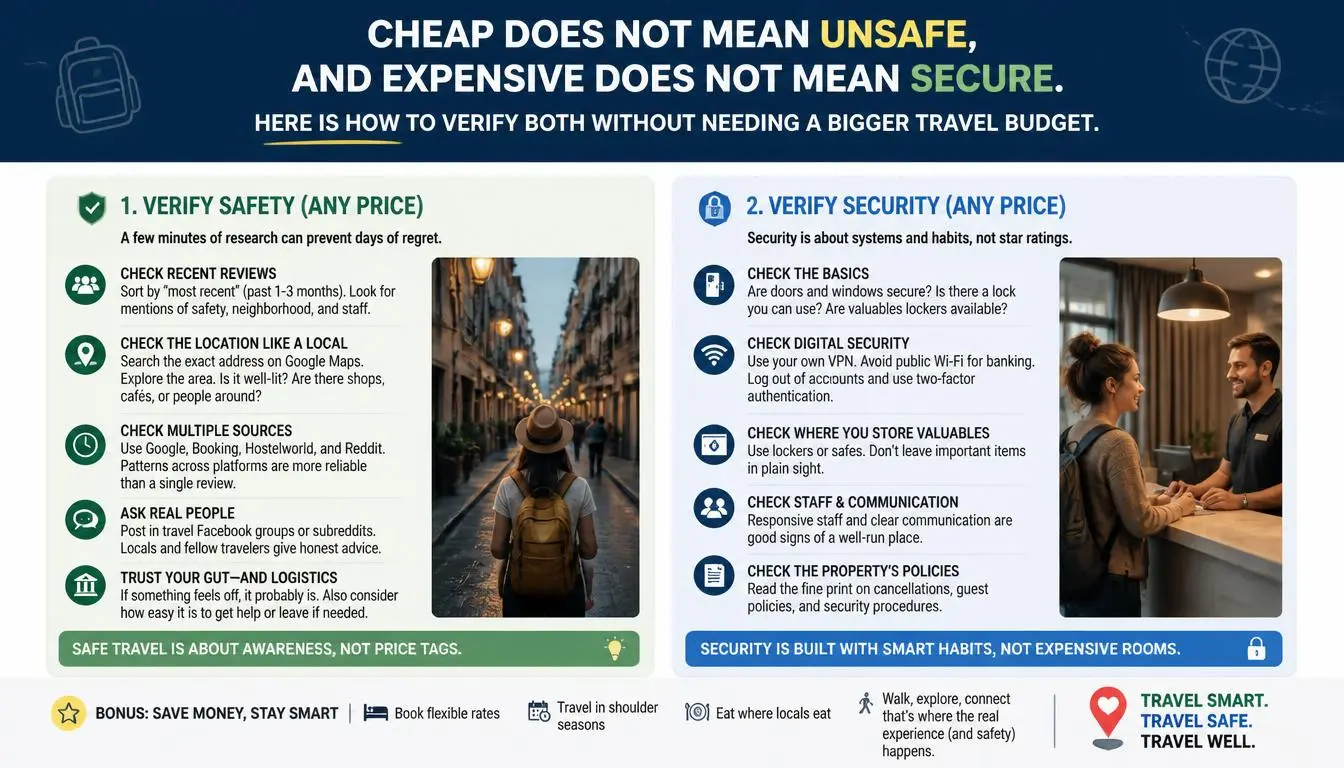
Here is a myth worth retiring immediately: cheap does not automatically mean unsafe, and expensive does not automatically mean secure. Price and safety are genuinely separate variables, and conflating them leads travelers either toward overpaying out of anxiety or toward a genuinely risky booking because the listing photos looked nice. Affordable accommodation that is also genuinely safe exists in nearly every destination. Finding it just requires checking the right things, not necessarily spending more money.
Read Reviews the Right Way
Start With the Negative Reviews, Not the Star Rating
A glance at an overall score tells you almost nothing useful. Scroll directly to the lowest-rated reviews and read them first, since this reveals the actual worst-case scenario before you book, rather than after you have already arrived and discovered it yourself. If the worst complaints are things you can genuinely live with- slightly thin walls, a quirky check-in process- that is useful context. If multiple reviews independently describe the same safety concern, a broken lock, an unlit entrance, an unresponsive staff presence overnight, that pattern deserves real weight regardless of how high the overall score sits.
Weight Recent Reviews More Heavily Than Old Ones
Management changes, ownership changes, and basic maintenance standards can shift considerably over a year or two. A property with excellent reviews from three years ago and a thinner, more mixed set of recent ones has likely changed, and the recent feedback reflects what you will actually encounter far more accurately than an outdated reputation does.
Treat Location as a Safety Decision, Not Just a Convenience One
A listing priced noticeably below everything else nearby is often sitting outside the city center or main tourist area for a reason, and that reason is not always benign. Before booking anything at a steep discount relative to its neighborhood, check its actual position on a map relative to public transit, main streets, and well lit, populated areas, rather than evaluating the price in isolation. A slightly pricier central option frequently works out cheaper overall once you account for daily transport costs and the time lost getting in and out of a more isolated location, and it is also simply safer to walk back to late at night than an unfamiliar stretch of unlit outskirts.
Most map services now offer a street level view of the actual surrounding area, and checking this before booking reveals far more honest context than curated listing photos ever will.
Be Skeptical of the Absolute Rock Bottom Price
Within any destination, there is usually a meaningful gap between the genuinely cheapest listing in the city and the broader range of solid budget options sitting just slightly above it. That rock bottom price often reflects real tradeoffs beyond simple comfort, security measures that were skipped, cleaning that happens less consistently, or basic safety features like working locks and adequate lighting that were never properly maintained. Aiming for a reasonable budget option rather than the single cheapest listing available typically costs very little extra while meaningfully reducing genuine risk.
If You Are Considering a Hostel Specifically
Shared accommodation introduces its own specific considerations worth checking directly. Confirm the property offers lockable lockers for valuables, since not every hostel actually provides them despite advertising secure storage generally. Smaller dorm rooms tend to offer more personal security and quieter rest than large rooms packed with twenty or more beds. If your priority is genuine rest and a secure environment rather than a lively social scene, avoid listings that specifically market themselves around nightlife or party culture, since the atmosphere and the typical security habits of guests both tend to differ considerably from a quieter property.
Do Not Limit Your Search to One Type of Accommodation
Hostels are far from the only budget friendly option, and casting a wider net often turns up a better balance of price and security than defaulting straight to the cheapest dorm bed available. Budget hotels, guesthouses, and homestays frequently come in at a comparable price point once you compare total cost honestly, often with considerably more privacy and security built in as standard. Traveling during shoulder season or with some flexibility around your exact dates also tends to unlock better pricing across every category, not just hostels specifically, simply because overall demand is lower.
Protect Yourself Once You Have Actually Arrived
Booking a genuinely safe property is only half the equation. Once you check in, use whatever secure storage the property actually offers, and keep your most important valuables on you or properly secured rather than left out in a shared space, a habit covered in more depth in keeping your documents and valuables safe while traveling. And trust your own direct impression once you are there. If a property feels genuinely unsafe in person despite positive reviews online, it is entirely reasonable to change plans and find somewhere else, rather than forcing yourself to stay somewhere that does not feel right simply because you already paid for it.
The Verdict
Affordable and safe are not opposites. They both come down to the same handful of checks, reading reviews for genuine patterns rather than a surface score, treating location as a real safety factor rather than pure convenience, avoiding the single cheapest option in favor of a reasonable budget choice, and staying alert once you have actually arrived. None of this requires a bigger budget. It requires spending a few extra minutes verifying what a listing’s price alone will never fully tell you.