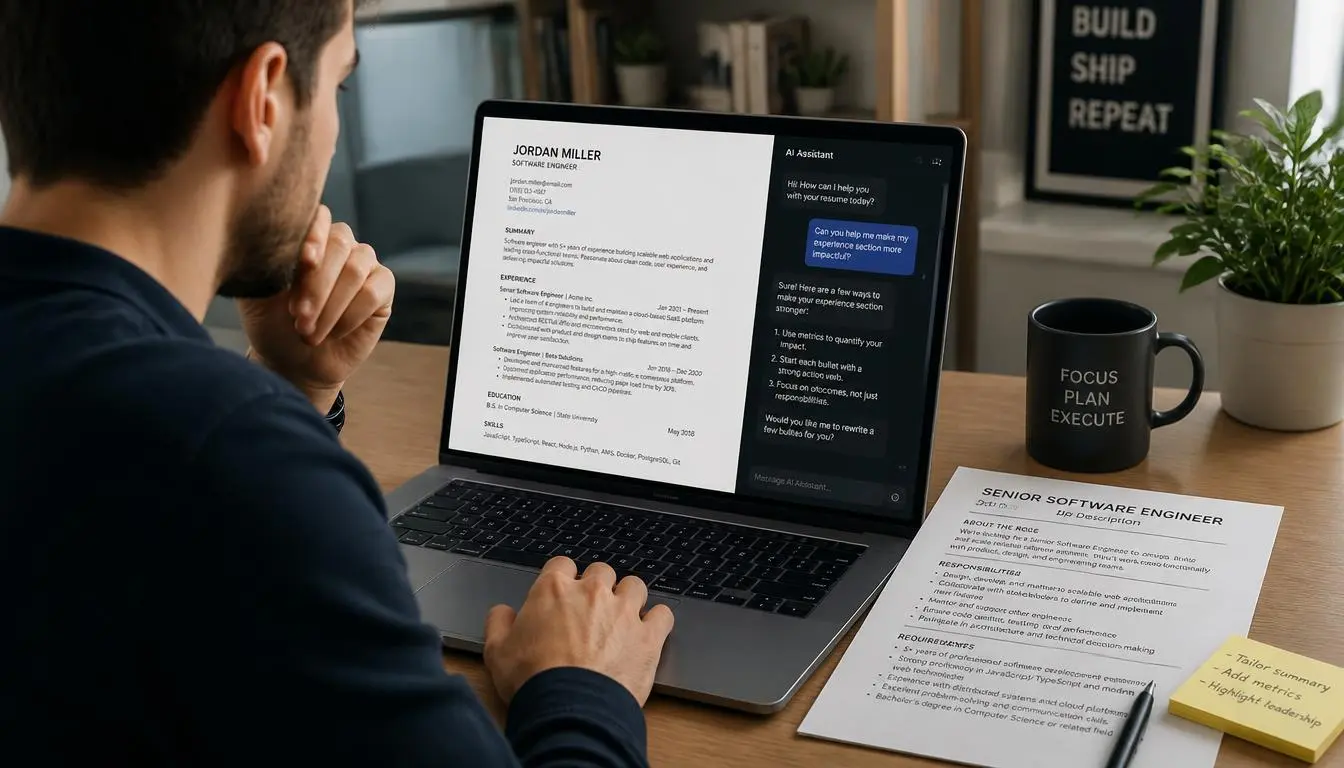
How to Use AI to Write a Resume That Passes ATS
Typing “improve my resume” into an AI chatbot and hoping for the best is the single fastest way to end up with a resume that sounds exactly like everyone else’s AI-generated resume. Recruiters can spot the telltale phrases within seconds: “dynamic, results-oriented professional,” “proven track record,” “passionate about innovation.” None of that gets you an interview. Used correctly, though, AI genuinely does speed up resume writing and can meaningfully improve how well it performs against an applicant tracking system. The difference comes entirely down to how you use it.
Why Vague Prompts Produce Vague Resumes
An AI model has no idea who you are, what you have actually accomplished, or what role you are applying for unless you tell it. Feed it a vague instruction, and it fills the gap with the most statistically generic phrasing available, which is precisely why so many AI-assisted resumes read as interchangeable. This is not a flaw in the technology itself. It is simply what happens when you ask a tool to guess at content it was never given.
The fix is straightforward in principle, if a little more work upfront than just typing a one-line request. You need to feed the AI two specific things before asking it to write anything: your actual resume or a detailed summary of your real work history, and the complete text of the job description you are targeting. Without both pieces, you are asking it to write blind.
Diagnose Before You Rewrite
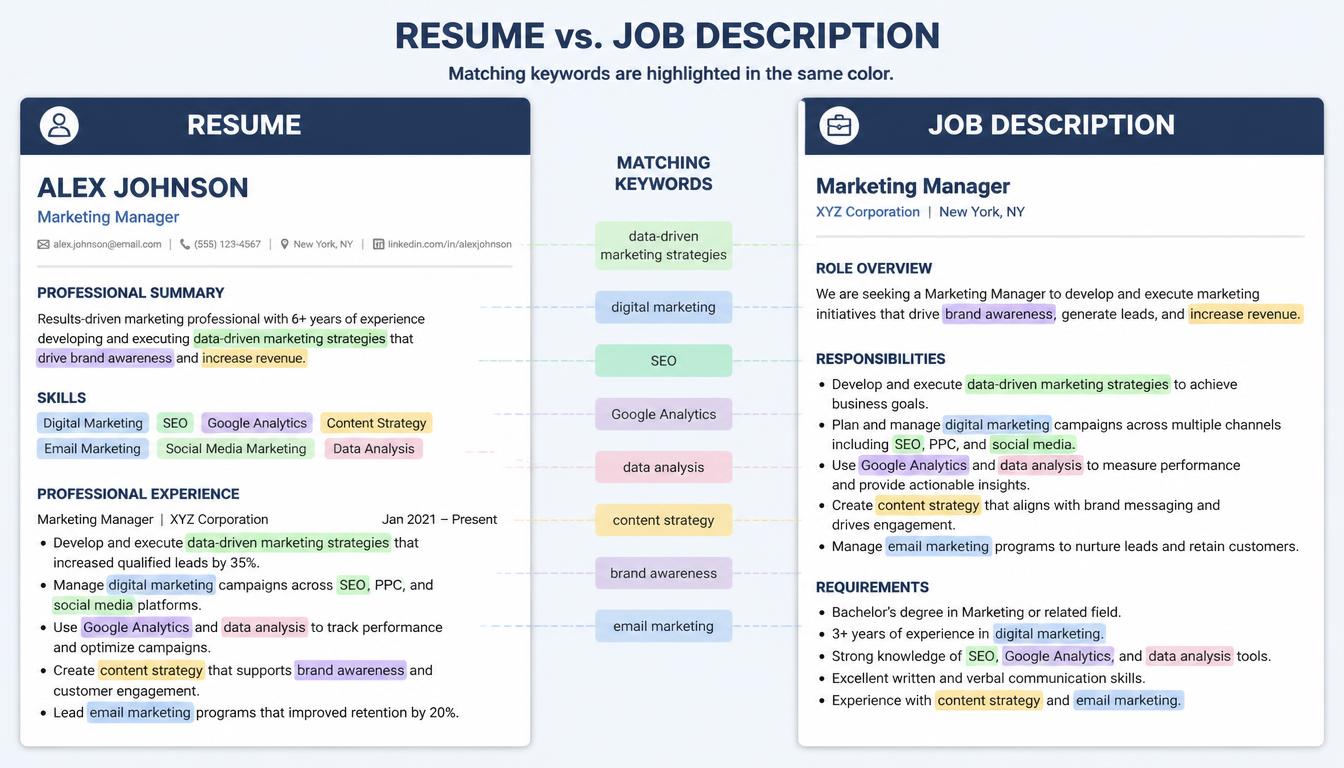
Before asking AI to change a single word, compare your current resume against the specific job description you want. Where does the language not match? Which required skills are missing entirely from your resume? Which sections read vaguely rather than demonstrating a concrete result?
This diagnostic step matters more than most job seekers expect, because it turns the next step into targeted repair work rather than a full regeneration from scratch. Asking AI to fix three specific, identified weaknesses produces a far more usable result than asking it to rewrite an entire resume with no clear direction, and it keeps your own voice and real accomplishments intact rather than replacing them wholesale with AI generated filler.
What AI Genuinely Does Well Here
Once you have identified the actual gaps, AI becomes a genuinely useful editing partner for a handful of specific tasks.
It excels at rewriting a weak, vague bullet point into something more concrete, provided you give it the real underlying accomplishment to work with rather than asking it to invent one. It is strong at comparing your resume’s language against a job description and surfacing exactly which keywords and phrases are missing, which matters directly for how an applicant tracking system scores your resume against that listing. It can also help quantify an achievement you described only vaguely, prompting you for the specific numbers, timeframes, or scale that turn a soft claim into something a hiring manager can actually evaluate.
None of this requires memorizing a long list of exact prompts. The underlying instruction that works consistently is simple: give the AI your real resume content and the target job description together, ask it to identify specific gaps or weak phrasing, and have it suggest concrete rewrites grounded only in what you actually provided.
The Line You Should Never Let AI Cross
Every credible source on this topic converges on the same warning, and it is worth taking seriously. AI should never invent an achievement, a metric, an employer, or a date that is not genuinely part of your real experience. It is remarkably easy for a model to fill a gap with a plausible sounding number or accomplishment if you are not explicit about what is real, and a fabricated claim discovered later, whether during an interview or after hiring, causes far more damage than a slightly weaker resume ever would.
A related trap is keyword stuffing. If an AI tool flags twenty missing keywords from a job description, resist the urge to cram all of them into your resume indiscriminately. An applicant tracking system might let a keyword stuffed resume through, but the human reviewing it afterward will not. Add only the keywords you can genuinely back up, and work them naturally into real bullet points describing your actual experience rather than dumping them into an isolated skills list.
A Workflow Worth Actually Following
Pulling this together, a genuinely effective process looks less like copying a prompt template and more like a repeatable habit:
Start with the specific role you are applying for and pull the full job description text. Compare it honestly against your current resume before changing anything, noting where the language, skills, or emphasis do not align. Bring both documents to an AI tool and ask it to identify concrete gaps and suggest specific, grounded rewrites rather than a full rewrite from nothing. Edit everything it produces, verifying that every claim, number, and detail reflects your actual experience rather than something the AI inferred to fill a gap. Finally, compare the finished version against the job description one more time before submitting, checking that it genuinely reads as tailored rather than generic.
This workflow is repeatable for every application, and it keeps AI in its proper role, a fast, capable editor working from real material, rather than an author inventing a career history on your behalf.
Tailoring Beats a Single Master Resume
One habit worth adopting alongside this workflow is resisting the temptation to send the exact same resume to every job you apply for, even when the roles look similar on the surface. Two postings for what appears to be the same job title often emphasize genuinely different skills, tools, or priorities depending on the specific company and team. Running each application through the diagnostic comparison step separately, rather than assuming one polished resume covers every similar sounding role, is what actually produces the keyword alignment an applicant tracking system is scoring against.
This does not mean rebuilding a resume from scratch for every single application. It means keeping your core resume as a solid foundation, then using AI specifically to adjust emphasis, reorder bullet points by relevance, and swap in the right terminology for each individual posting. That targeted adjustment takes a few minutes once you have the workflow down, and it consistently outperforms a single generic version sent everywhere.
Formatting Still Matters More Than People Expect
AI conversations about resumes tend to focus heavily on wording and keywords, but formatting plays an equally real role in whether an applicant tracking system parses your resume correctly in the first place. Even a perfectly worded resume can lose critical information if it is built with tables, columns, text boxes, or unusual fonts that a parsing system struggles to read accurately.
AI tools can help here too, though in a more limited way than with content. Ask a tool to review your resume specifically for parsing risks, elements like embedded tables, graphics, or nonstandard section headings, rather than assuming a visually polished document is automatically ATS friendly. A clean, single column layout with standard section names remains the safer structural choice regardless of how strong the actual content underneath it happens to be.
Do Not Skip the Human Read Through
After AI has helped tighten your language and align your keywords, read the entire resume aloud to yourself before submitting it anywhere. This simple habit catches two things AI tools consistently miss: sentences that are technically correct but feel unnatural coming from you specifically, and small factual inconsistencies that slipped through during multiple rounds of editing.
A resume that passes an applicant tracking system but reads as obviously AI generated to the human reviewing it afterward has only cleared half the actual challenge. The goal was never simply beating a filter. It was reaching a real person and giving them a genuine, accurate reason to bring you in for an interview.
The One Thing AI Genuinely Cannot Do
AI can meaningfully improve how your resume reads and how closely its language matches a job description. What it cannot do is definitively tell you whether a specific applicant tracking system will pass your resume through, since ATS software varies considerably between employers, and no writing tool has visibility into the exact configuration a specific company is using. Treat AI as a strong editor for content and keyword alignment, not as a guaranteed pass or fail verdict, and pair it with your own careful proofreading before you ever hit submit.