How to Write Product Descriptions That Actually Convert
Picture two versions of the same product listing. One reads: “Made from 100% cotton, machine washable, available in five colors.” The other reads: “The soft cotton weave gets even softer with every wash, so it becomes the shirt you reach for without thinking.” Same shirt. Same basic facts. Only one of these actually makes someone want to buy it, and the difference between them is the entire subject of this guide.
Features Tell, Benefits Sell
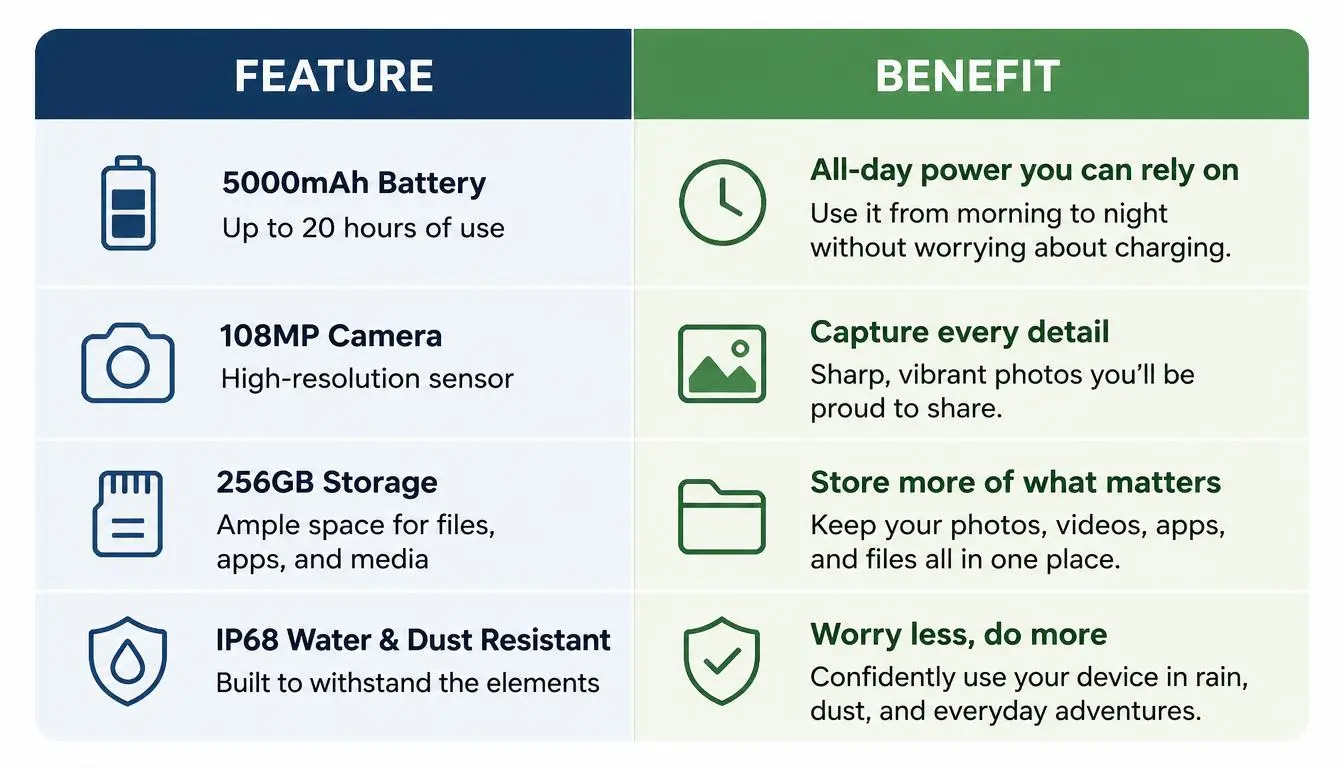
The single most common mistake in product copy is stopping at the feature and never translating it into what that feature actually means for the person reading it. A feature is a fact about the product. A benefit is what that fact does for the customer’s actual life, and customers are shopping for the second thing, even when they think they are evaluating the first.
Take a pair of noise-cancelling headphones. Listing “active noise cancellation” as a feature is accurate but forgettable. Translating that same fact into “block out a crying baby on your next flight and actually sleep” gives the shopper something concrete to picture themselves experiencing. The feature justifies the purchase logically. The benefit is what actually creates the desire to buy in the first place.
A useful habit here is going through your existing feature list and asking “so what?” after each one, honestly, until you arrive at something the customer would actually care about in their own life.
Engage the Senses You Can’t Physically Offer
Online shopping strips away one entire dimension of the in-person retail experience: the ability to touch, hold, or physically test something before buying it. Sensory language partially closes that gap by helping a reader imagine the physical experience of a product rather than simply reading a spec sheet about it.
Words describing texture, sound, weight, and feel do real work here. A candle description that mentions “the crackle of the wooden wick” and “a warm, smoky scent that fills the room within minutes” gives a reader something to imagine beyond a simple ingredient list. This matters most for product categories where physical sensation is central to the appeal, but even functional products benefit from at least some sensory grounding rather than pure spec listing.
Address the Objection Before It Becomes a Reason to Leave
Every product category carries a handful of predictable hesitations that stop a shopper from completing a purchase, and strong product copy addresses these directly rather than hoping the customer overlooks them. Clothing shoppers worry about sizing and fit. Electronics shoppers worry about durability and battery life. Furniture shoppers worry about whether it will actually fit their space.
Rather than leaving these concerns unaddressed and hoping for the best, build the answer directly into the description itself. A sizing chart reference, a specific durability claim backed by a real detail, or a line addressing exactly the hesitation a shopper is likely feeling in that moment removes friction at precisely the point where a sale is most likely to be lost.
Cut the Jargon and the Filler
Product copy that leans on inflated language, “revolutionary,” “game changing,” “industry leading,” without backing it up with anything concrete tends to blend into the noise rather than standing out from it. Shoppers see enough product pages to recognize filler instantly, and vague superlatives read as exactly that: filler, rather than genuine differentiation.
The same applies to unnecessary complexity. If a product genuinely requires technical explanation, keep that explanation as plain and direct as possible rather than reaching for jargon that sounds impressive but actually creates friction for a reader trying to quickly decide whether this product solves their problem.
Emotion Opens the Door, Logic Walks Through It
A well established principle in marketing psychology is that purchasing decisions tend to begin with an emotional response and get justified afterward with logical reasoning. This does not mean product copy should be purely emotional with no facts attached. It means the emotional hook, the feeling of relief, excitement, confidence, or ease that the product genuinely delivers, deserves to come first, with the logical details, specs, materials, dimensions, supporting that feeling rather than leading it.
A description that opens purely with a spec list asks the reader to do the emotional translation work themselves. A description that opens with the feeling, then backs it up with the facts, does that translation for them.
Specificity Builds More Trust Than Vague Superlatives
“High quality” tells a shopper nothing they can actually evaluate. “Stitched with a reinforced double seam that holds up through years of daily wear” tells them something concrete and verifiable sounding, even if they cannot personally test the claim before purchasing. Precise, specific details consistently read as more credible than broad, unverifiable claims, simply because specificity signals that the seller actually knows the product well enough to describe it accurately.
This principle extends to numbers as well. A vague claim like “long battery life” carries far less weight than “up to fourteen hours on a single charge,” even when both are technically true, because the specific version gives the shopper something concrete to compare against their own expectations.
Format for the Way People Actually Read Online
Very few shoppers read a product description top to bottom like a paragraph in a book. Most scan quickly, looking for the specific piece of information that answers their immediate question. Short paragraphs, a bolded key benefit near the top, and a scannable bullet list of core features or specs further down accommodate this reading pattern rather than fighting against it.
The story and emotional framing still matter, but structuring the page so a skimming reader can extract the essentials in a few seconds, while a more engaged reader can still find the fuller narrative, serves both types of shoppers rather than optimizing for only one.
Write for One Specific Person, Not a General Audience
A description written to appeal broadly to everyone often ends up connecting genuinely with no one. Before writing, picture one specific, realistic version of your actual customer: what they are trying to accomplish, what frustration led them to search for this product in the first place, and what would genuinely reassure them that this particular listing is the right answer to that search.
This single shift in mindset changes the words that naturally come out. A description written for “anyone who might buy running shoes” tends toward generic, forgettable language. A description written specifically for someone training for their first half marathon, worried about shin pain during long runs, produces copy with real specificity and genuine relevance, even though the shoes themselves have not changed at all.
Let the Product Category Guide How Much Story to Tell
Not every product benefits from the same amount of narrative framing, and pushing an elaborate lifestyle story onto a simple, functional item can feel forced rather than persuasive. A premium candle or a piece of jewelry often earns a longer, more evocative description built around feeling and experience. A replacement phone charger or a basic kitchen utensil generally performs better with a shorter, clearer description that gets straight to the practical value, since the shopper buying it already knows exactly what problem they need solved and simply wants confirmation this specific product solves it well.
Matching the length and tone of a description to what a specific product category genuinely calls for, rather than applying one uniform template across an entire catalog, tends to serve both types of purchase decisions far better.
Pairing strong product copy with the right local visibility strategy matters just as much for a service based business; see how local SEO helps dentists attract more patients for a related look at converting online attention into real customers.
Treat Your First Draft as a Starting Point, Not a Final Answer
No single description works equally well forever, and the strongest product copy on any given page is usually the result of testing more than one version rather than trusting instinct alone. Small changes, a different opening line, a reordered set of benefits, a more specific claim in place of a vague one, can meaningfully shift how a page performs, and the only reliable way to know which version genuinely works better is comparing them directly against real customer behavior over time.