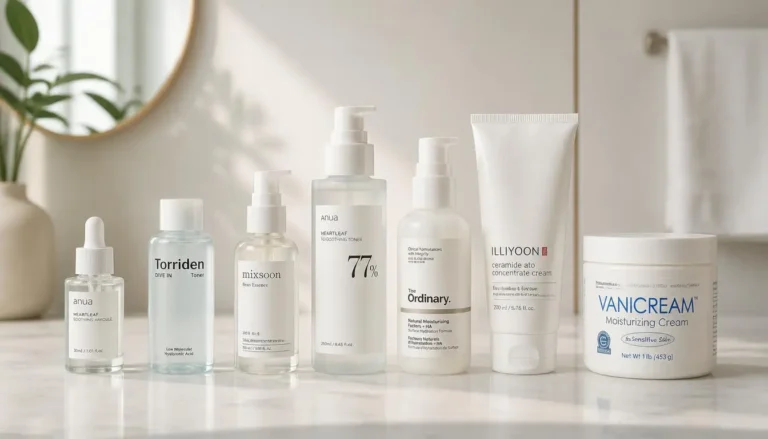
How to Figure Out Your Skin Type
Every skincare decision, from which cleanser to buy to how often you moisturize, depends on one piece of information most people never actually confirm. Dermatologists generally classify skin into five main types: normal, dry, oily, combination, and sensitive, and knowing which category you fall into is what separates a routine that genuinely works from one that leaves your skin worse off than before you started.
The Quick Answer
To figure out your skin type, wash your face with a gentle cleanser, pat it dry, and wait thirty minutes without applying any other products. If your skin looks shiny all over, you likely have oily skin. If it feels tight, dull, or flaky, you likely have dry skin. If the T-zone is oily while the cheeks stay normal or dry, that points to combination skin. If your skin reacts with redness, itching, or burning, it is sensitive. If none of these show up, your skin is normal.
The Three Factors That Actually Define Skin Type
Skin type comes down to three measurable factors rather than guesswork. How much moisture your skin holds affects its comfort and elasticity. How much oil, or sebum, your skin produces affects softness and shine. How sensitive your skin is affects how well it tolerates outside conditions and skincare products. Together, these three factors are what dermatologists use to sort skin into its five main categories.
It also helps to understand that skin type is different from a skin concern. Type describes your skin’s baseline oil and moisture levels. A concern, such as acne, dark spots, or dehydration, is a specific issue that can occur within any skin type. Someone with oily skin can also deal with sensitivity, and someone with dry skin can still experience breakouts. Knowing your type first makes it easier to treat any concern correctly afterward.
The Bare Faced Test
The most reliable, no product method for identifying your skin type is often called the bare faced test or wash test. It requires nothing more than a gentle cleanser and about thirty minutes of patience.
Here is how it works:
- Wash your face with a mild, gentle cleanser
- Pat your skin dry rather than rubbing it
- Apply nothing else, no moisturizer, no serum, no makeup
- Wait thirty minutes and examine your forehead, nose, cheeks, and chin
Once the thirty minutes are up, compare how your skin looks and feels against the characteristics below.
Oily skin will appear shiny across most or all of the face, often with visibly enlarged pores and a thicker feeling complexion.
Dry skin will feel tight, uncomfortable, or even slightly rough, sometimes with visible flaking and a duller appearance.
Combination skin shows oiliness concentrated in the T-zone, meaning the forehead, nose, and chin, while the cheeks remain normal or dry.
Normal skin will feel comfortable without appearing shiny or tight anywhere, with minimal visible pores and an even tone.
Sensitive skin may show redness, itching, or a burning sensation during or shortly after the test itself. If irritation appears during the thirty minute wait, it is best to stop the test early rather than let it continue.
The Blotting Paper Test
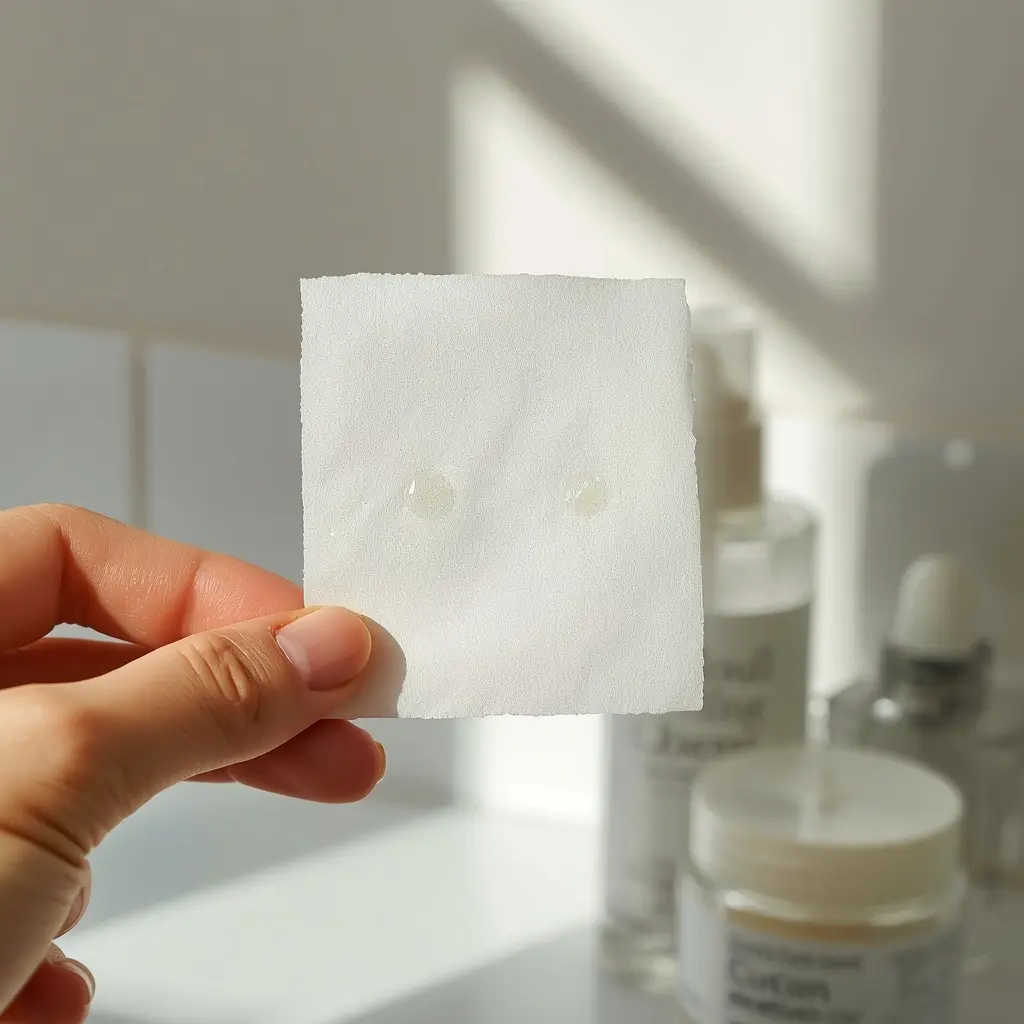
For a faster read, particularly useful for distinguishing between oily and dry skin, the blotting paper method works well mid day, even over makeup. Gently press a piece of blotting paper against your forehead, nose, cheeks, and chin, using a separate section of paper for each area if possible. Hold the paper up to the light afterward to see how much oil was picked up.
If the paper shows little to no oil across all areas, your skin leans dry. If oil shows up mainly from the forehead and nose, you are likely dealing with combination skin. If every section of the paper picks up visible oil, oily skin is the most likely result.
Why Skin Type Is Not Always Fixed
Skin type is not necessarily a permanent label. It can shift with the seasons, with hormonal changes, with stress, and simply with age. Younger skin tends to skew closer to normal or oily, while skin often becomes drier later in life as oil production naturally slows. Combination skin can also become more or less pronounced depending on climate, since colder, drier air often exaggerates the contrast between an oily T-zone and drier cheeks.
Because of this, it is worth repeating the bare faced or blotting paper test occasionally, particularly if your skin has felt noticeably different lately or if you have moved to a new climate. A routine built around last year’s skin type may no longer be the right fit today.
When to See a Dermatologist Instead
Home tests are a reliable starting point, but they are not a substitute for a professional opinion in every case. If your skin remains persistently dry, flaky, or tight even after consistent moisturizing, or if sensitivity and irritation continue despite gentle products, a dermatologist can examine factors that are harder to assess at home, including sun damage, texture changes, and pore behavior. This is especially worth doing if you suspect a skin condition rather than a straightforward type.
Putting Your Skin Type to Use
Once you know your type, it becomes much easier to choose the right products rather than relying on trial and error. If you have not yet built out a full daily routine, pairing your skin type with a simple beginner skincare routine is the natural next step, since knowing whether your skin is oily, dry, combination, sensitive, or normal directly shapes which cleanser, treatment, and moisturizer will actually work for you rather than against you.
Frequently Asked Questions
How long does the bare faced skin type test take?
The test itself takes about thirty minutes of waiting after cleansing, though the setup takes only a minute or two.
Can my skin type change over time?
Yes. Skin type can shift due to age, hormones, stress, climate, and seasonal changes, which is why it is worth retesting occasionally rather than assuming it stays the same forever.
What is the difference between skin type and a skin concern?
Skin type refers to your skin’s natural oil and moisture baseline, such as oily, dry, or combination. A skin concern, like acne or dark spots, is a specific issue that can occur within any skin type.
Do I need to test my skin type if I already know I have sensitive skin?
It is still worth doing periodically, since sensitivity can overlap with other characteristics, such as dry sensitive or oily sensitive skin, and identifying the full picture helps you choose more effective products.