How to Layer Necklaces Without Them Tangling
Layered necklaces almost always look effortless in photos and rarely feel effortless by the end of the day. Chains twist together, pendants slide out of place, and what started as a polished stack turns into a knotted clump at the collarbone. The frustrating part is that tangling is not random. It comes down to a small set of fixable choices around length, texture, and how the necklaces are put on and stored.
The Quick Answer
To layer necklaces without tangling, choose chains of different lengths spaced at least two inches apart, mix textures and weights rather than combining identical delicate chains, put necklaces on longest first, and store them separately rather than in a single pile or drawer. Most successful layered looks use two to five necklaces total.
Why Necklaces Tangle in the First Place
Tangling almost always happens when two chains sit at the same point on the neck. As you move throughout the day, they cross over each other repeatedly until a small knot forms. Thin, delicate chains are especially prone to this, since they have little structure to keep them separated once they start touching.
Understanding this one mechanism- chains of the same length rubbing against each other- makes every other tip in this guide easier to apply with intention rather than guesswork.
Rule 1: Space Every Chain at Least Two Inches Apart
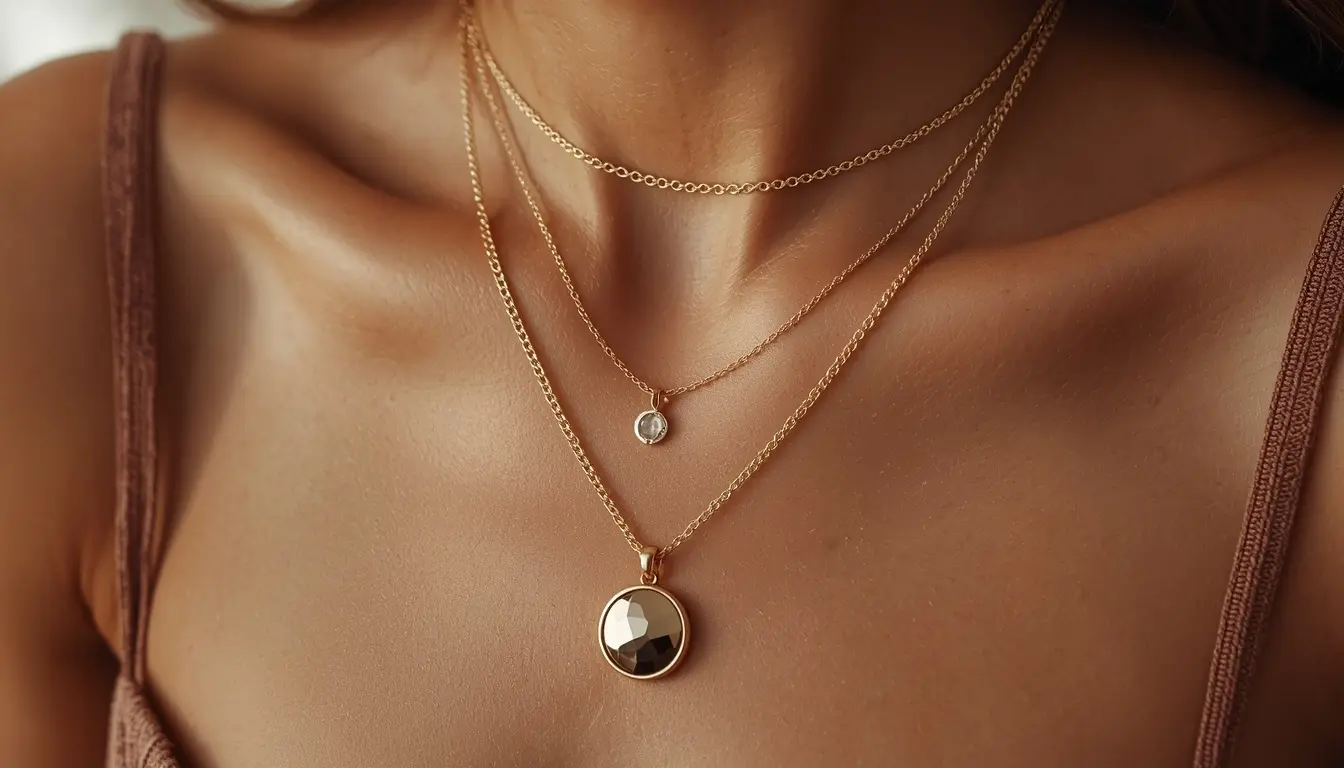
The single most effective fix for tangling is length variation. Aim for a minimum gap of two inches, roughly five centimeters, between each necklace at its widest point. This gives each chain its own space to hang without brushing against the one above or below it.
A reliable three piece layering structure looks like this:
- A short choker or collar length chain sitting closest to the collarbone
- A mid length chain with a small pendant or charm resting just below it
- A longer chain or bold pendant necklace finishing the look at the chest
Because each piece occupies a distinct “lane,” they naturally avoid crossing paths as you move.
Rule 2: Mix Textures and Chain Types, Not Just Lengths
Identical delicate chains are the most likely combination to tangle, since smooth, similar surfaces grip each other easily. Mixing chain types creates natural separation because different textures and thicknesses cannot grip one another the same way.
Effective combinations include:
- A smooth snake chain paired with a textured curb or box chain
- A fine delicate chain paired with one slightly heavier, more structured chain
- A flat chain mixed with a rope or beaded chain
Contrast also has a styling benefit beyond function. Starting with your daintiest, shortest piece and layering in chunkier links or textured chains reads as intentional rather than accidental, which is part of what makes a layered look feel polished instead of cluttered.
Rule 3: Be Careful With Heavy Pendants and Gemstones
Necklaces with movement, such as birthstone pendants or larger charms, tend to swing and shift more than flat discs or simple tags, which increases the chance of tangling. If you are layering pieces with stones or heavier pendants, keep them on separate lengths from each other rather than pairing two statement pieces at the same level. One charm per chain is generally the cleanest, most wearable approach when mixing initials, stones, or pendants into a stack.
Rule 4: Put Necklaces On and Take Them Off the Right Way
How you handle your necklaces matters just as much as how you choose them. Put chains on starting with the longest piece first, working down to the shortest, so each layer settles into place with fewer crossovers along the way.
At the end of the day, resist the habit of unclasping and pulling off one necklace at a time, since this is one of the most common ways chains wrap around each other. Instead, lift the group off together as one unit and lay everything flat before separating the pieces for storage.
Rule 5: Store Each Necklace Separately
Tangling does not only happen while necklaces are being worn. Tossing several chains into one drawer or jewelry box compartment is one of the most common causes of knots discovered the next time you reach for them.
A few simple storage habits prevent most of this:
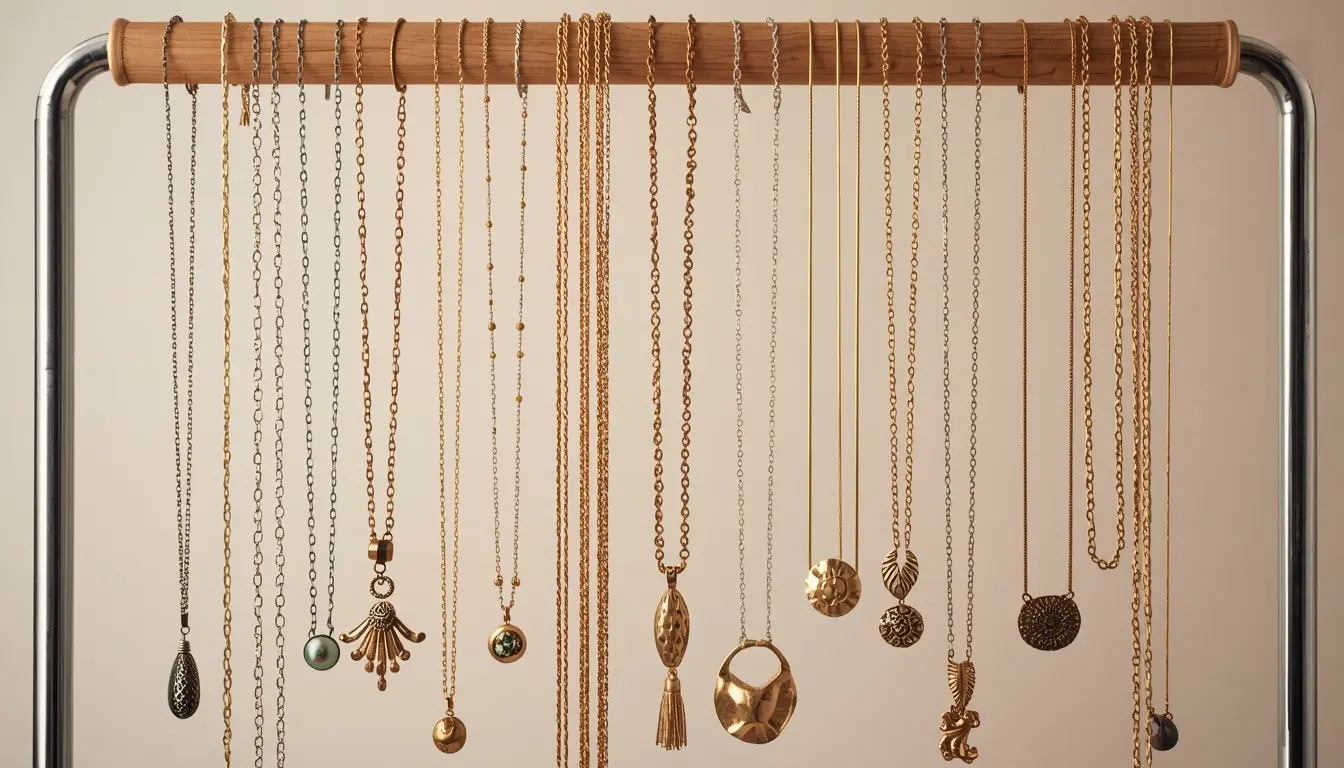
- Hang each necklace individually on a hook or a necklace stand
- Use a jewelry box with separate compartments for each chain
- If space is limited, store delicate chains in individual small pouches or zip bags
Investing even a few minutes into proper storage saves considerable time untangling knots later.
Tools That Make Layering Easier
If you frequently layer the same necklaces, a few small accessories can simplify the process further. A layering clasp, sometimes called a necklace detangler, connects multiple chains at a single point so they stay grouped and spaced correctly throughout the day. Alternatively, attaching several necklaces to the same jump ring achieves a similar effect, keeping the clasps bound together in one place rather than shifting independently.
How to Untangle a Knot Without Damaging the Chain
If a knot does form despite your best efforts, avoid pulling on it directly, since this is what causes chains to bend, kink, or snap. A gentler approach that jewelers commonly recommend is using two straight pins or safety pins to carefully loosen the knot from the inside out, working slowly rather than forcing it. Patience here protects delicate chains far better than trying to yank the tangle free.
Frequently Asked Questions
How many necklaces can I layer at once without them tangling?
Most successful layered looks use between two and five necklaces. Beyond that, tangling becomes significantly harder to prevent regardless of spacing or technique.
Do I need to buy new necklaces to layer successfully?
Not necessarily. Many tangling issues come down to how existing pieces are combined and worn, rather than needing an entirely new jewelry collection. Adjusting length spacing and chain mixing often solves most problems.
What is the fastest way to prevent tangling while storing necklaces?
Hanging each necklace separately on a hook, stand, or in an individual compartment prevents the majority of tangling that happens between wears, since chains never come into contact with each other while stored.