How to Choose the Right Belt for Your Outfit
A belt is one of the few accessories that everyone notices without realizing they noticed it. The wrong one, too wide for the trousers, too shiny for the shoes, or too small to sit comfortably, quietly undermines an otherwise good outfit, while the right one makes everything look finished. The good news is that choosing well comes down to a handful of simple decisions: size, width, buckle, color, and the occasion. Once you know how each one works, picking a belt stops feeling like guesswork.
A Belt Has Two Jobs
Before anything else, decide what you need the belt to do. Its first job is practical, holding up trousers or jeans. Its second job is stylistic, finishing an outfit or shaping it, which is why belts also show up over dresses, coats, and oversized shirts, where they define the waist rather than hold anything up. The rules differ slightly depending on which job you are hiring the belt for, so it helps to know that from the start.
Start With the Right Belt Size
The most common sizing guideline is that your belt size should be about one to two inches larger than your trouser size, so a pair of size 34 trousers usually calls for a size 36 belt. Sizing varies between makers, so check the size chart on the specific belt you are considering rather than assuming the number on the label is universal.
A more reliable method is to measure a belt that already fits you well. Measure from the fold behind the buckle to the hole you use most often, then match that length to the size chart. When a belt fits correctly, the prong should rest in the middle hole, which leaves room to tighten or loosen it as your day, your meal, or the season changes. If the tail end hangs far past the buckle, the belt is too long for you, and it will look untidy no matter how good everything else is.
Match Belt Width to the Occasion and Your Loops
Belt width signals how formal an outfit is. Slimmer belts read as dressier, with dress belts generally falling somewhere between about one and one and a half inches wide, while wider belts, from about one and a half inches upward, read as more casual. A useful mental shortcut is that the wider the belt, the more relaxed the outfit.
Width also has a practical side. Check the width of the belt loops on the trousers you wear most, since a belt that is too wide for narrow loops will bunch or refuse to fit, and one that is too narrow can slip and look lost. If you reach for the same pair of trousers all the time, take a moment to measure the loops before you buy.
Dress Belt or Casual Belt?
Understanding the difference between these two categories does most of the work when you are choosing.
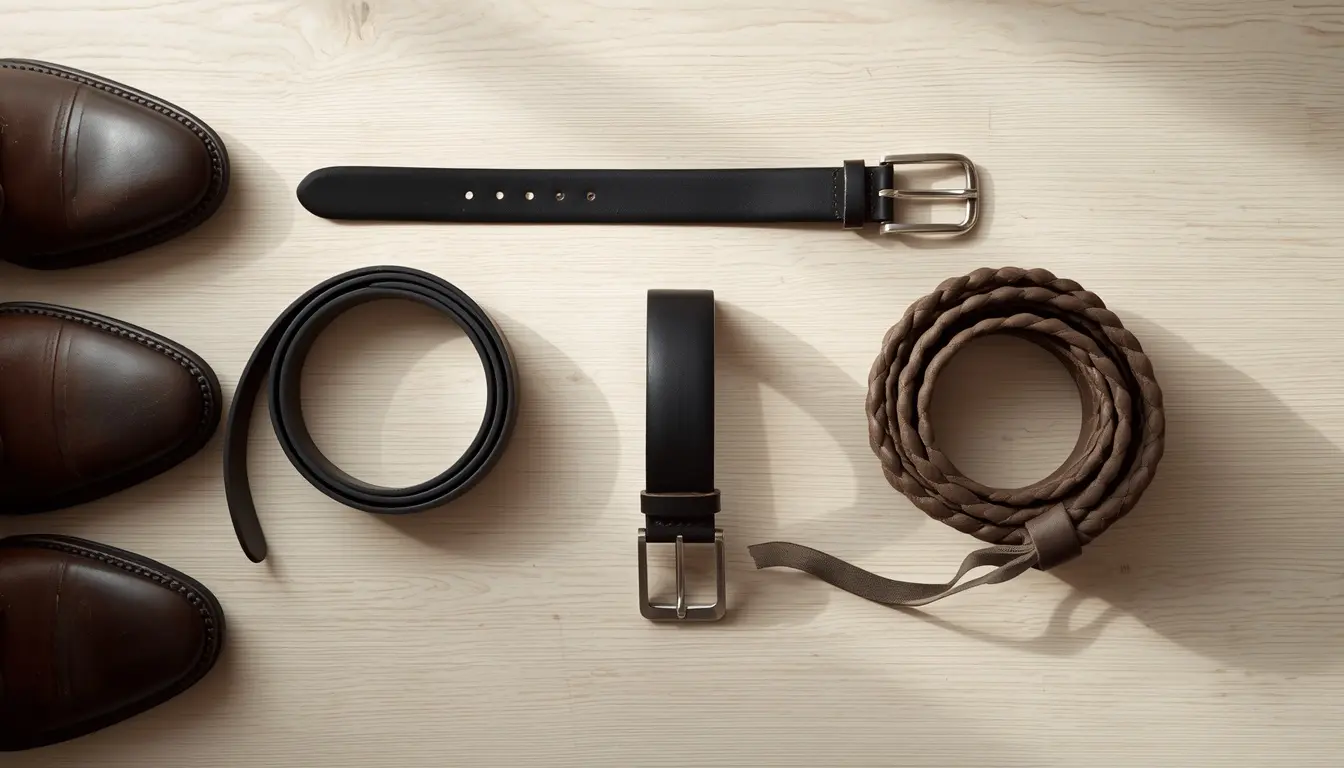
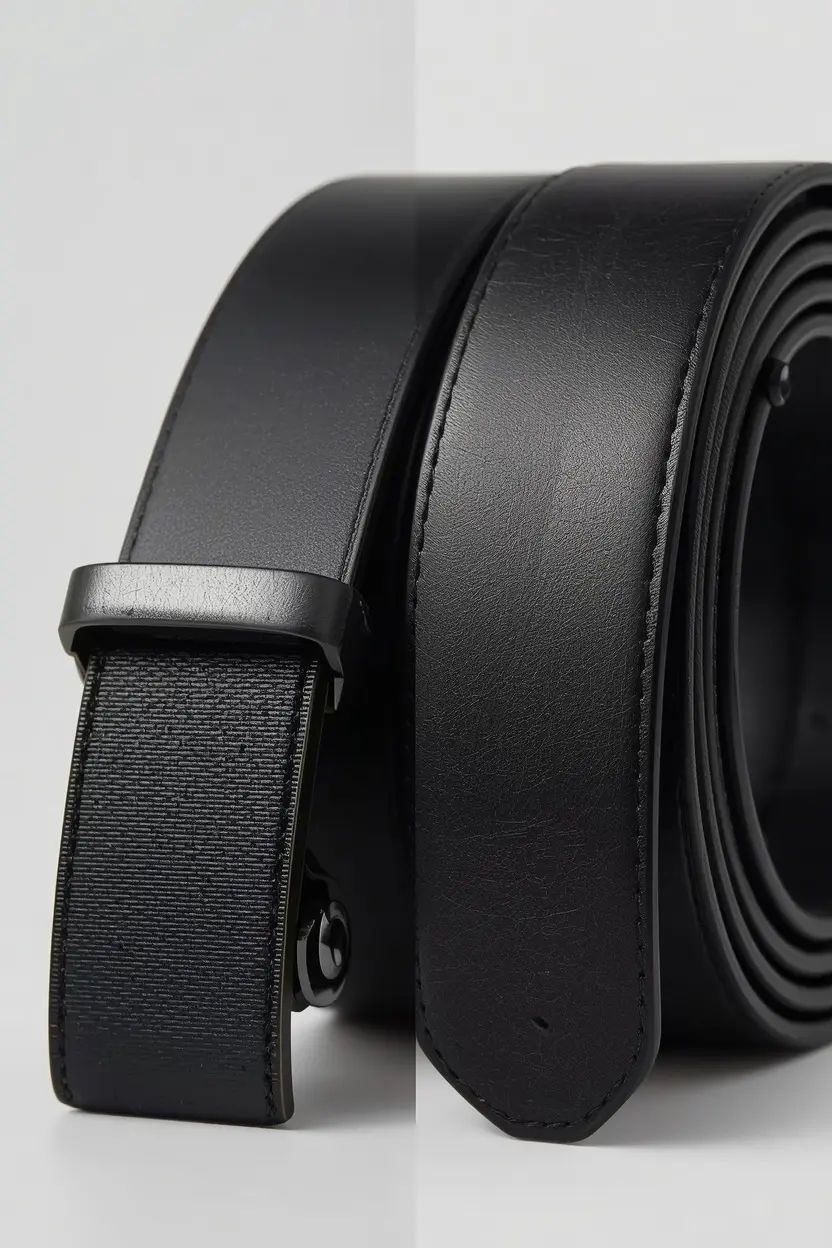
A dress belt is slim, made from smooth, polished leather, with a small, simple frame buckle in a metal finish. Black and dark brown are the classic colors, and this is the belt for suits, tailored trousers, and situations where you want to look polished.
A casual belt is wider and often has a matte or textured finish, with a chunkier or more decorative buckle. It also allows a much wider range of materials, including canvas, woven fabric, braided leather, and suede, so it is where your personality can come through. A braided leather belt is a useful middle ground, since it can dress up jeans or dress down chinos.
Whichever category you buy from, look for full grain or top grain leather where possible, since it tends to hold its shape better and age more gracefully than lower quality alternatives.
Rules That Still Hold
A few long standing guidelines remain reliable, especially in formal settings.
- Match your belt and shoes. For formal outfits, aim for the same color family and a similar level of shine, so black shoes go with a black belt and brown shoes with a brown one. Suede shoes are a special case, since a glossy belt clashes with their soft, matte texture, so pair suede with a matte belt.
- Match your metals. The buckle’s metal finish should coordinate with your watch, your other jewelry, and the hardware on your shoes, silver with silver and gold with gold. The classic exception is a wedding ring, which can contrast with the rest.
- Keep the tail short. On a dress belt in particular, the leftover end should not dangle far past the first loop.
- Match the buckle to the formality. A large, chunky buckle worn with a tailored suit looks out of place in the same way a wide casual belt does, so keep hardware small and subtle when the outfit is formal.
Rules That Have Relaxed
Not every old rule has survived unchanged. Wearing a brown belt with black shoes, or the reverse, used to be considered a firm mistake, and in casual settings today it is generally accepted. Exact shade matching is also something of a myth, since a belt in the same color family is usually enough, and a tan belt works perfectly well with cognac shoes.
The key is context. In a formal or conservative setting, such as a job interview or a professional event, sticking to a close match remains the safest choice, which fits well with the guidance in how to dress appropriately for a job interview. In casual settings, you have far more freedom to mix and experiment.
Belts Beyond Trousers
Belts are not only for holding up trousers. Worn over a dress, a long cardigan, a coat, or an oversized shirt, a belt cinches the waist and creates shape where there was none. Placement changes the effect, since a belt at the natural waist defines the middle of the body, while one worn lower on the hips creates a longer, more relaxed line. If you are still working out which silhouettes flatter you, the approach in how to dress for your body shape with confidence explains why defining the waist works so well for many shapes.
For these fashion belts, matching rules relax further. A contrasting color or a bold buckle is often the whole point, treating the belt as a deliberate accent rather than something that quietly blends in.
Build a Small Belt Collection
You do not need a drawer full of belts. Two or three cover most needs: a black dress belt, a dark brown dress belt, and one casual option such as a braided or textured belt. This small set handles work, weekends, and most occasions in between, and it fits neatly into a capsule wardrobe, where every piece earns its place by working with several outfits.
If you enjoy trying a current trend, a statement belt is one of the lowest risk ways to do it. A bold buckle or a bright color adds a fresh note to simple basics, a strategy that echoes the accessory testing ideas in how to mix trendy pieces with timeless basics, and if the trend fades, replacing a belt costs far less than replacing a jacket.
Look After It
A good belt lasts for years with minimal effort. Store it hanging or loosely rolled rather than tightly coiled, keep leather away from prolonged moisture, and rotate between belts so the holes you use most do not stretch and crack. When the leather splits or the holes elongate beyond repair, it is time for a replacement.
The Short Version
- Choose a belt size about one to two inches larger than your trousers, with the prong in the middle hole
- Keep dress belts slim and smooth, and let casual belts run about one and a half inches or wider
- Check that the belt fits your trouser loops
- For formal outfits, match your belt to your shoes and your buckle to your other metals
- Relax the rules in casual settings, but keep them in formal ones
- Two or three well chosen belts cover almost every situation.