How to Build a Capsule Wardrobe From Scratch
A capsule wardrobe is a small, curated collection of versatile clothing designed to mix and match into far more outfits than the item count suggests. The idea dates back further than most people realize, first introduced by London boutique owner Susie Faux in the 1970s and later popularized by designer Donna Karan through her Seven Easy Pieces collection in 1985. Nearly fifty years later, the core appeal has not changed. A well-built capsule wardrobe makes getting dressed faster, cuts down on impulse purchases, and reduces closet clutter, without sacrificing personal style.
The Quick Answer
To build a capsule wardrobe from scratch, start by defining the lifestyle it needs to support, sort your existing clothes into keep, donate, and maybe piles, choose one or two neutral base colors with a few accent colors, and fill in outfit gaps gradually rather than buying everything at once. Most capsule wardrobes land between 25 and 40 pieces, though smaller occasion-specific capsules can work with far fewer.
1: Define the Lifestyle Your Capsule Needs to Support
Before touching your closet, think honestly about how you actually spend your time. A capsule wardrobe built for a corporate office looks very different from one built for a stay-at-home routine or frequent travel. Ask yourself where most of your days are spent, what activities fill your week, and what climate you are dressing for.
This step matters because a capsule wardrobe is meant to reflect your actual life, not an idealized version of it. If you rarely attend formal events, a capsule weighted toward eveningwear will leave you without enough options for the days you actually live. Understanding your personal style alongside your lifestyle makes this step far more accurate, since style preference and daily routine together shape what your capsule actually needs to include.
2: Audit Your Closet Honestly
The next step is the one most people dread, but it is also the most useful. Pull everything out of your closet and sort each item into three categories.
Keep covers items you genuinely love, wear regularly, and that currently fit you well.
Donate or sell covers pieces that no longer fit, feel outdated, or have not been worn in the past six months or longer.
Maybe covers anything you are unsure about. Box these items up and set a thirty day timer. If you do not reach for anything in the box during that window, it is safe to let go of the whole pile.
Most people are surprised to discover they already reach for the same twenty percent of their closet on repeat. Those frequently worn pieces are usually your capsule foundation already sitting in your closet, which means you may need far fewer new purchases than expected. If your capsule is meant to carry you through a seasonal shift, this audit pairs well with the process of transitioning your wardrobe from winter to spring, since both start from the same honest inventory of what you already own.
3: Choose a Cohesive Color Palette
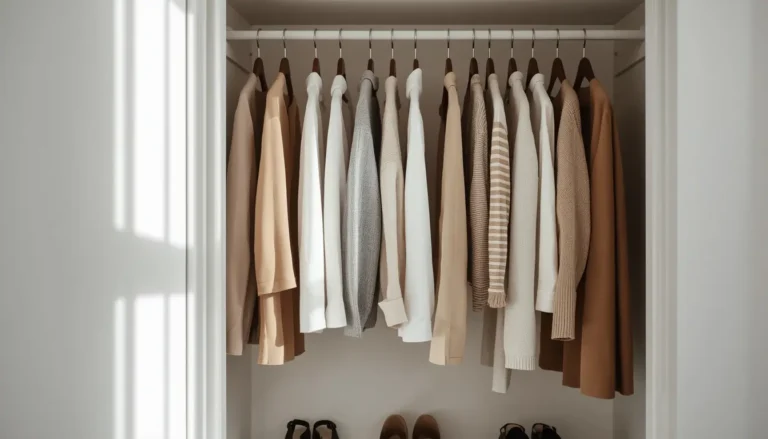
A capsule wardrobe works because every piece is designed to combine with nearly everything else, and color is the easiest way to guarantee that. Start with one or two versatile neutrals, such as black, navy, beige, gray, or olive, as your base. From there, add a small number of accent colors you genuinely love wearing.
A simple rule that keeps this manageable is to build every bottom so it works with every top in the capsule. If a piece cannot pair with at least two or three others already in your closet, it likely does not belong in a tightly built capsule, no matter how much you like it on its own.
4: Decide on Your Item Count and Ratios
Most full capsule wardrobes fall somewhere between 25 and 40 items, including shoes and bags, though smaller occasion specific capsules, such as a travel capsule, can work with as few as 11 to 15 pieces.
A useful ratio to follow is including more tops than bottoms, generally somewhere between a 2 to 1 and 3 to 1 ratio. This creates more outfit variety without requiring you to buy an equal number of pants and shirts, since tops tend to be easier and cheaper to mix in for variety.
If you already own a handbag well suited to your lifestyle, it likely already belongs in your capsule count rather than needing replacement, since a capsule is meant to work with useful pieces you already own wherever possible.
5: Fill Gaps Gradually, Not All at Once
The most common mistake people make when starting a capsule wardrobe is trying to build the entire thing in a single shopping trip. This approach tends to lead to overspending and buyer’s remorse, since it is difficult to judge what you actually need before living with your existing pieces for a while.
A more sustainable pace is to track what you reach for over the next thirty days, noting patterns on your phone as they emerge. After that window, identify five to ten genuine gaps in your capsule and fill them gradually, aiming for roughly one or two new pieces per month rather than a single large purchase. This pacing also gives you room to apply the same restyling and refresh strategies you would use on any wardrobe, so a capsule never feels finished so much as continuously refined.
6: Build in Layering and Seasonal Flexibility
A capsule wardrobe does not need to be rebuilt from scratch each season. Instead, plan for small seasonal swaps of roughly five to ten pieces at a time, layering in heavier fabrics like wool and cashmere for colder months and swapping them out for lighter fabrics as the weather warms.
Keeping one or two flexible layering pieces, such as a cardigan or lightweight jacket, allows a single capsule to stretch comfortably across shoulder seasons without needing an entirely separate wardrobe for each stretch of the year.
You Do Not Have to Declutter Everything First
While a full closet audit is useful, it is not strictly required before starting. If a complete declutter feels overwhelming, an equally valid approach is to simply pull out the pieces you already wear and love, build your first capsule around those, and live in it for a while before deciding what else to remove. Decluttering the rest of your closet often becomes far easier once you already know exactly what you are keeping.
Frequently Asked Questions
How many pieces should a beginner capsule wardrobe have?
Most full capsule wardrobes range between 25 and 40 pieces, including shoes and accessories, though a smaller travel or occasion specific capsule can work well with as few as 11 to 15 items.
Do I need to buy new clothes to start a capsule wardrobe?
Not necessarily. Many people can build their first capsule almost entirely from clothes they already own, then fill in only a small number of genuine gaps afterward.
How long does it take to build a capsule wardrobe?
Building a capsule wardrobe is better treated as an ongoing process than a single event. A closet audit can be done in a weekend, but most people take several weeks to a few months to fill remaining gaps thoughtfully.
Can a capsule wardrobe include trendy pieces?
Yes. A capsule can absolutely include on trend items as long as they align with your personal style and get worn regularly. The goal is intentional curation, not strict minimalism for its own sake.