
Where to Find Startup Funding When You’re Just Starting Out
Most new founders discover the same frustrating reality within their first few weeks of research: traditional bank loans, the funding source most people think of first, are usually the hardest option to actually get. Most banks want to see two or more years in business and consistent revenue before they will lend, which rules out exactly the stage most first-time founders are in. The good news is that traditional bank loans are only one option among many, and understanding which sources actually fit your specific stage saves considerable time and frustration.
Funding Needs Change as Your Startup Grows
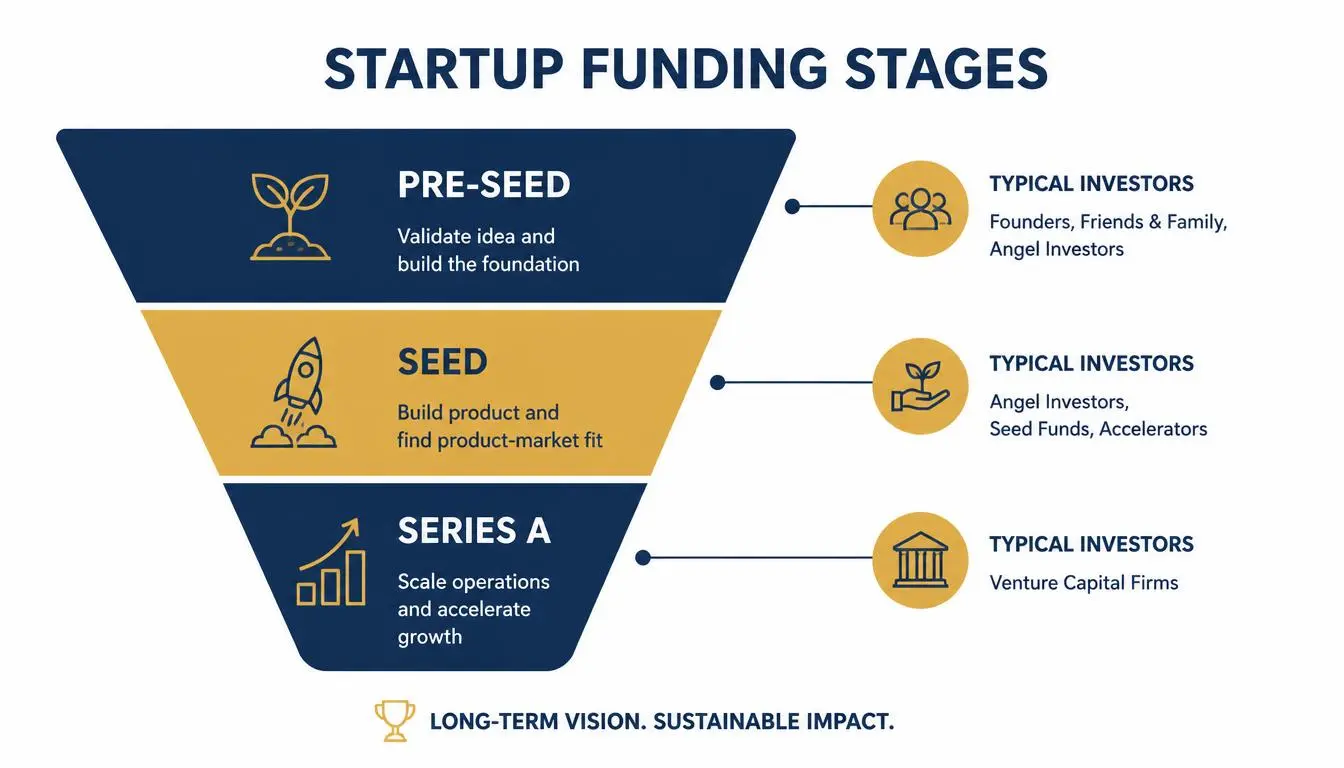
Before looking at specific sources, it helps to understand that startup funding is not a single event. It typically moves through recognizable stages, and the right funding source depends heavily on which stage you are actually in.
The earliest stage, often called pre-seed, covers the period right after an idea forms, when the main goal is simply validating whether the concept has real market interest. Seed funding follows once you have enough validation to justify a more serious, often externally funded round aimed at building an actual product and conducting deeper market research. Later rounds, commonly labeled Series A and beyond, come once a business has demonstrated real traction and is focused on scaling rather than proving the basic concept works.
Start With What You Already Control
Personal savings, commonly called bootstrapping, remains the most common starting point for a reason. Using your own money means no loan application, no investor pitch, and no waiting period, and you retain complete ownership and decision-making control over the business. The obvious tradeoff is personal financial risk, so this option works best when you have a realistic sense of how much runway your savings can genuinely provide before the business needs to become self-sustaining.
Friends and family funding is often the next accessible step once personal savings are not enough on their own. This can move quickly compared to institutional funding, but it carries a different kind of risk entirely, the potential strain on a personal relationship if the business struggles or the money is not repaid as expected. Setting clear, written terms upfront, even for a small informal loan, protects both the business relationship and the personal one.
Funding That Does Not Require Giving Up Equity
For founders who want to raise money without giving away ownership in the business, a few solid options exist beyond personal and family funds.
Small business grants are frequently described as the closest thing to free money available to a new business, since they typically require no repayment and no equity in exchange. The tradeoff is availability. Grants are often narrowly targeted toward specific industries, business types, or founder demographics, such as grants aimed specifically at women owned or minority owned businesses, which means finding one that actually fits your specific business takes real research rather than a quick search.
Microloans offer a more accessible alternative to traditional bank financing, typically ranging from around five thousand to fifty thousand dollars, with more flexible repayment terms than a standard bank loan. These are often a realistic option for founders whose credit history would not clear the bar for a larger traditional loan.
Crowdfunding allows you to raise money directly from a large group of individual supporters, typically in exchange for early access to your product, a reward, or occasionally equity in the business, depending on the specific crowdfunding model you choose. Beyond the funding itself, running a crowdfunding campaign can double as an early test of whether your product idea genuinely resonates with real potential customers, though it does require putting together a compelling, well told story to attract backers in a crowded space.
Funding That Involves Giving Up Some Ownership
Angel investors are individuals, often with their own business or investing background, who provide capital to early stage companies in exchange for equity. This route typically requires a well prepared pitch deck focused on your vision, what differentiates your product, and your realistic potential for growth. Angel investment tends to fit best once you have moved past pure idea validation and have at least an early version of your product or some initial market evidence to show.
Venture capital generally becomes relevant at a later stage than most first time founders are in when reading a guide like this one, typically once a business has already established product market fit and a real customer base, and is focused on scaling that traction. It is worth knowing this option exists for the future, even if it is not the right fit for the very earliest days of a business.
Business credit cards offer another route to accessing capital, leveraging your personal credit history to fund initial expenses. This can provide useful flexibility for smaller, ongoing costs, though the higher interest rates typical of credit compared to a structured loan make it a better fit for short term needs than for major startup capital.
Structured Support Programs Worth Considering
Incubator and accelerator programs combine funding with structured mentorship and support, often working with a cohort of startups simultaneously rather than a single company in isolation. These programs can provide not just capital but genuinely useful guidance during a stage where founders often lack a network of experienced advisors. In exchange, many of these programs take a small equity stake, so it is worth understanding the specific terms before applying.
SBA backed loans, offered through participating lenders in partnership with the Small Business Administration, provide another path toward more traditional financing with somewhat more accessible terms than a standard bank loan, since the government backing reduces some of the lender’s risk. This route still typically requires a solid business plan and some financial documentation, but it remains more attainable for newer businesses than a fully traditional bank loan.
Matching the Source to Your Actual Situation
Rather than pursuing every funding source available, it is far more efficient to match your approach to your specific stage and needs. If you are still validating a basic idea, personal savings, friends and family, or a small grant tend to fit better than an investor pitch, since investors typically want to see at least some evidence the concept works before committing capital. If you already have an early product and some market traction, angel investment or a well suited accelerator program becomes a more realistic conversation. Understanding which stage you are actually in, rather than assuming you need to raise a large round immediately, is often the difference between a funding search that moves efficiently and one that stalls out chasing a mismatched source.
For more strategic guidance on the early days of building a business, see six things to know before starting your first online business, or explore more Business & Finance guides on Daily Anytime.
FAQ’s
What is the easiest type of startup funding to get when just starting out?
Personal savings and friends and family funding are generally the most accessible starting points, since they do not require the validation, credit history, or pitch materials that most institutional funding sources expect.
Do I need a business plan to apply for startup funding?
It depends on the source. Banks and SBA backed lenders typically require a detailed business plan, while angel investors often prioritize a concise pitch deck instead. Grants usually require a specific application tailored to that grant’s own criteria.
Are startup grants really free money with no strings attached?
Grants generally do not require repayment or equity, which is why they are often described as close to free money. That said, most come with specific eligibility requirements tied to industry, business type, or founder background, and the application process itself can be competitive and time consuming.
How much personal savings should I use to fund my own startup?
There is no universal number, since it depends heavily on your personal financial situation and how much runway your business realistically needs. A more useful question is how long you can sustain your personal finances if the business takes longer than expected to become profitable, and planning around that realistic timeline rather than an optimistic one.
Should I give up equity or take on debt to fund my startup?
Both paths involve real tradeoffs. Equity funding, such as angel investment, does not require repayment but does mean sharing future ownership and decision making influence. Debt, such as a loan or credit card, keeps full ownership intact but requires repayment regardless of how the business performs. The right choice depends on your comfort with financial risk versus your comfort with shared control.