How to Eat Well on a Trip Without Overspending on Food
The best meal of your trip will probably cost less than the worst one. That sounds backwards, but it is the most reliable pattern I have seen in years of eating my way around the world. The overpriced plate with a view of the monument is usually forgettable, and the unmarked place two streets away, full of people on their lunch break, is the one you will describe to friends. Price and quality are barely related in travel food, and once you accept that, eating on a trip gets both cheaper and better. This guide gives you five questions that decide where and how to eat, and a handful of safety habits so a great meal does not turn into a bad week.
Why Food Quietly Eats Your Budget
Food is the line item travelers forget to plan. You can book flights and hotels months ahead, but meals happen three times a day, every day, in places you do not know, often when you are hungry and tired. Hungry and tired is exactly when people pay the tourist premium, which is the extra charged for convenience and location near the big sights. Multiply a few overpriced meals by the length of a trip and the total is surprising.
The fix is not eating badly or skipping meals. It is making a few decisions in advance, so that you are not choosing a restaurant at the moment you are least able to choose well.
The Five Questions That Decide What You Eat
Whenever you plan a meal, run through these five. They cover nearly everything that matters.
Where: Away From the Tourist Hotspots
The single most consistent piece of advice from experienced travelers is to eat away from the main attractions. Restaurants right beside the sights depend on one time visitors, so they have less reason to offer value or quality. Restaurants a few blocks away, in residential or working neighborhoods, depend on locals who come back, which pushes quality up and prices down. Walking even five or ten minutes in any direction usually makes a visible difference.
There are a few easy signals of a tourist trap. Menus in many languages, big photographs of every dish, and staff standing outside inviting people in are all warning signs. A short menu in the local language, a crowd of regulars, and a handwritten daily special are the opposite. It also helps to ask people who live there, such as a host, a shopkeeper, or a taxi driver. Hotel concierges are not always the best source for budget advice, since their recommendations may lean toward places that suit hotel guests rather than cost conscious ones.
When: Make Lunch the Big Meal
In many countries, lunch is the main meal of the day, and restaurants price it accordingly. Fixed price lunch menus and daily specials are often noticeably cheaper than the same kitchen’s dinner prices, for slightly smaller portions. Eating your largest, most adventurous meal at midday, and keeping dinner light, is one of the easiest ways to spend less while still eating at a proper restaurant. Eating at normal local mealtimes also tends to mean fresher food, since kitchens are busy and turning over dishes quickly.
What: Eat Local and In Season
Imported dishes and unfamiliar versions of foods from other countries tend to cost more and taste less convincing than what the region does best. Order what the locals order, and favor ingredients that are in season, because they are fresher, tastier, and cheaper. Ask what the day’s special is, and let the cook’s choice guide you.
How Much: Share, Order Smart, and Skip the Extras
Portions in some places are generous, so sharing a dish or ordering a starter as your meal can be plenty, especially for solo travelers. Drinks are a hidden cost. Bottled water, soft drinks, and alcohol can add up quickly, so ask for tap water where it is safe to drink, and consider a refillable bottle. Check the bill for service charges or cover fees, so that you do not tip twice by accident.
How Safe: Street Food Without Regret
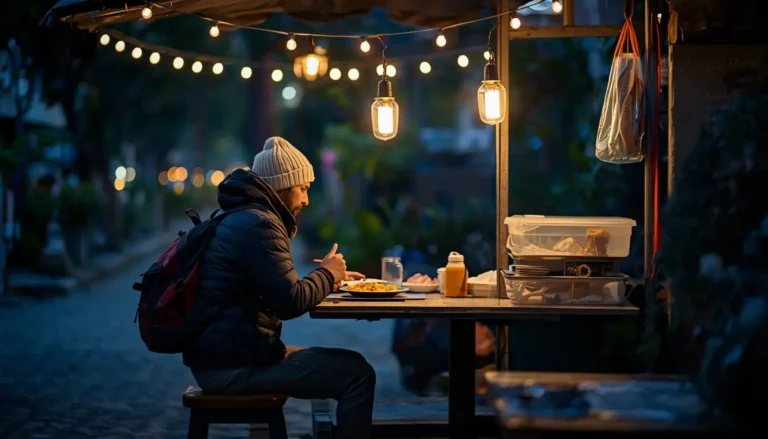
Street food can be some of the best and cheapest eating anywhere, and it can also be the riskiest. A few habits make it much safer. Choose stalls that are busy, because high turnover means food is not sitting around. Make sure the food is cooked in front of you and served hot, and look at whether the stand and the vendor appear clean. Avoid anything that has been sitting out. Some university travel health guides take a stricter line, advising caution with street food altogether, so use your own judgment and your own stomach’s history.
Whatever you eat, wash your hands with soap, or use sanitizer, before meals. In places where tap water is not considered safe, use sealed bottled water, avoid ice, and use safe water for brushing your teeth. If you have a food allergy, always ask the cook directly about ingredients. For destination specific health advice, check your national health authority’s travel guidance before you go. This guide is general information, not medical advice.
A Quick Look at What Saves You Money
| Habit | Why it saves money | Watch for |
|---|---|---|
| Eating a few blocks from the sights | Lower prices and better value from restaurants that depend on locals | Check hygiene and busyness |
| Lunch as the main meal | Set menus and daily specials are often cheaper than dinner | Specials may run out late in the day |
| Markets and grocery stores | Fresh food at local prices, ideal for picnics and breakfast | Markets often close by early afternoon |
| Tap water and a refillable bottle | Avoids paying for bottled water at every meal | Only where local water is safe |
| Sharing dishes | One large plate can feed two | Confirm portion size before ordering |
Use Markets and Grocery Stores
Local markets and supermarkets are among the most reliable ways to spend less on food, and some travelers consider them the best way of all. Pick up fresh bread, fruit, cheese, or whatever the region does well, and have a picnic in a park or at your accommodation. Breakfast is the easiest meal to handle this way. A simple breakfast from a bakery or a shop costs a fraction of a hotel breakfast and often tastes better. If your room has a kettle or a small kitchen, you can also prepare simple meals there.
Markets are also a window into how a place eats, so they are worth visiting even when you are not buying much. Go early, since many close by the afternoon. If you want a wider plan for keeping the whole trip affordable, traveling on a tight budget without missing out covers lodging, transport, and activities alongside food.
Splurge Once, and Choose It Well
Saving on everyday meals leaves room for one special meal that is genuinely worth the price. Pick a restaurant that is known for something specific, book it ahead if you can, and make it an occasion. This is a better use of money than several mediocre mid priced dinners. A little research before you go helps you find it, and the checks in researching a destination before you book include looking into local dishes and dining customs. If food is the main reason you are traveling, planning a trip around an interest like food or art shows how to build a whole itinerary around it.
Dietary Needs and Allergies Abroad
If you are vegetarian, vegan, or have religious or medical dietary requirements, a little preparation goes a long way. Learn how to explain your needs in the local language, and carry a written card if you can. Be aware that some dishes may contain hidden ingredients such as meat stock or nuts. In places where your needs are less commonly understood, markets and groceries can be an easy and reliable fallback.
Frequently Asked Questions
Is street food safe to eat while traveling?
It can be, with care. Choose busy stalls where the food is cooked in front of you and served hot, check that the vendor and the stand look clean, and avoid anything that has been sitting out. Some health guides advise extra caution, so use your own judgment and check destination specific advice.
Is it cheaper to eat lunch out than dinner?
Often, yes. Many restaurants offer set lunch menus or daily specials that cost noticeably less than the equivalent dinner, making lunch the best moment to eat a proper restaurant meal on a budget.
How can I tell if a restaurant is a tourist trap?
Common signs include menus in many languages, large photographs of every dish, staff calling out to passersby, and a location right beside a major attraction. A short local language menu and a crowd of regulars usually point the other way.
Is tap water safe to drink?
It depends on the destination. In some countries it is perfectly safe, and in others it is not recommended. Check your health authority’s travel guidance before you go, and use sealed bottled water and avoid ice where tap water is not considered safe.
Should I ask my hotel for restaurant recommendations?
It can help for general advice, but hotel staff are not always the best guide to budget options. For good value, ask locals such as shopkeepers, hosts, or drivers, who often know where people actually eat.