How to Build a Capsule Jewelry Collection
Open your jewelry box, or the drawer, or the dish by the bed, and count what you actually wore this month. For most of us, the number is small: a pair of earrings, one chain, maybe a ring, while everything else sits tangled and forgotten. That gap between what we own and what we wear is exactly what a capsule jewelry collection solves. It is a small set of versatile pieces that work together and suit your daily life, so that getting dressed takes seconds and everything you own earns its place. Here is how to build one without overspending or overthinking.
What a Jewelry Capsule Actually Is
A capsule collection borrows the idea behind a capsule wardrobe: fewer, better, more versatile pieces. Most guides suggest somewhere between five and seven core pieces for everyday wear, chosen for comfort and timeless style over trends. The pieces are meant to be worn alone or layered together, and to work with most of what you already own. The same thinking that makes building a capsule wardrobe from scratch so useful applies here, only on a much smaller and more affordable scale.
Three Layers: Everyday, Anchor, and Accent
It helps to think of your collection in three layers, each with a different job.
| Layer | Its job | Typical pieces | Guiding rule |
|---|---|---|---|
| Everyday | The pieces you wear almost daily without thinking | Small studs, a fine chain, a simple ring | Comfortable enough to sleep and shower in, if the material allows |
| Anchor | The pieces that define a look | Hoops, a pendant, a bracelet or watch | Choose one anchor per outfit, so nothing competes |
| Accent | The expressive or sentimental pieces | A statement ring, a family heirloom, a piece with meaning | Wear sparingly, so it stands out |
Most of your budget and attention should go to the first two layers, since they do the heavy lifting. The accent layer can be small, and it is where personal taste and fun belong.
Start With Your Metal and Your Skin
Before you buy anything, decide on your main metal tone. Yellow gold, white metals such as silver, and rose gold each suit different tastes and undertones. Choose one as your base, and the rest of the collection becomes much easier. If you are drawn to more than one, a sensible approach is to have a chain or key piece in each tone, and to mix them deliberately, as described in mixing metals in jewelry without it looking off. If you are not sure which tone flatters you most, understanding your undertone through color analysis and finding your best colors gives you a useful starting point.
Your skin matters as much as your taste. Nickel is a common cause of skin reactions to jewelry, so if your skin is sensitive, look for pieces clearly described as nickel free. The word hypoallergenic is a marketing term that is not always tightly regulated, so read the actual materials rather than relying on the label alone. If you notice persistent redness, itching, or a rash, stop wearing the piece and speak to a doctor or dermatologist.
Choose Materials That Match How You Wear Them
Materials decide how long jewelry looks good, and the differences are worth understanding. Retailers differ in what they recommend, and solid precious metals cost more, so use this table as a guide and weigh it against your budget.
| Material | What it is | Good for | Watch for |
|---|---|---|---|
| Solid gold | Gold throughout, mixed with other metals for strength | Daily pieces you want to keep for years | Higher cost, and purity levels vary |
| Gold filled | A thick layer of gold bonded to a base metal | A durable, more affordable gold look | Not solid gold, so quality varies |
| Vermeil | A gold layer over sterling silver | A gold look on a silver base | The gold layer can wear over time |
| Gold plated | A very thin gold layer over a base metal | Trial pieces and trend items | The plating can wear through, sometimes within a year of daily use |
| Sterling silver | A silver alloy, widely used in fine jewelry | Everyday silver pieces | It can tarnish, and some alloys contain nickel |
| Stainless steel or titanium | Durable, low maintenance metals | Hard wearing everyday pieces | The styles are more limited, and reactions are still possible |
A sensible approach is to spend more on the pieces you wear daily, where durable materials pay off, and spend less on trend driven accents, where plated pieces are a fine way to experiment.
The Seven Essential Pieces
Most guides arrive at a very similar list. Here it is, organized by where you wear each piece.
For the Ears: Studs and Hoops
A pair of small studs is the easiest piece to wear every single day, and a pair of simple hoops, in a small or medium size, brings slightly more presence and works day or night. Hoops move and rub more than studs, so durability matters.
For the Neck: A Chain and a Pendant
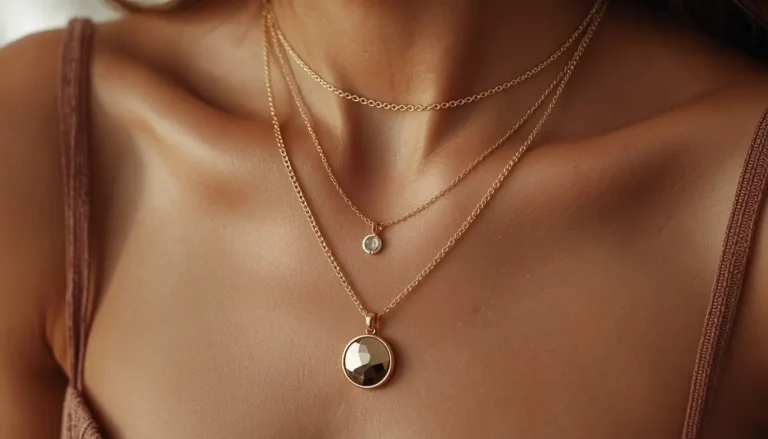
A fine chain is the foundation of most collections, worn alone or layered. A chain around 16 to 18 inches suits many necklines. Add a pendant with meaning for you, such as a small stone, an initial, or a simple shape, that you would be happy to wear several days in a row.
For the Wrist: A Bracelet or a Watch
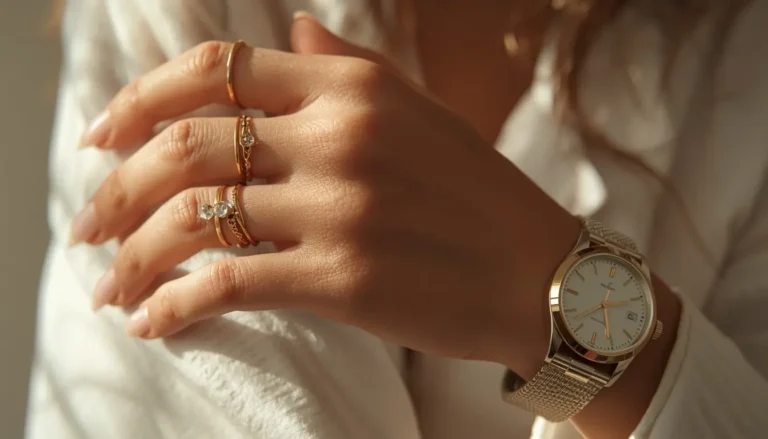
A sleek bracelet, bangle, or delicate chain bracelet is easy to slip on and works with most outfits. If you prefer a watch, it can serve as your wrist anchor, and the guidance in choosing a watch that matches your style helps you pick one that fits your wardrobe.
For the Hands: A Stacking Ring
Slim stacking rings let you wear one for a quiet look or several for a more layered one. Rings are also the easiest place to experiment with mixing metals.
One Statement Piece
Your seventh piece is the one with personality, such as a bold ring, a pair of larger earrings, or a distinctive cuff. Keep it as the single focal point of an outfit, and let everything else stay simple.
Wear the Same Pieces Three Ways
The real test of a capsule is how many looks it can produce. For a workday, keep to your everyday layer: studs, a fine chain, and a ring or two, so the look is polished and quiet. For the weekend, add a bracelet or a slightly bolder hoop for a relaxed, easy feel. For an evening out, choose one anchor piece, such as your pendant or your hoops, add the statement piece, and let the rest recede. Same collection, three different moods, and no extra shopping needed. If you ever feel unsure, remove one piece before you leave the house, which often looks more elegant than adding another.
How to Decide What to Buy First
Do not buy all seven at once. Start by looking at what you already wear, and at your daily routine. Someone who works at a desk and dresses simply may need delicate pieces, while someone who is active every day may want something more robust. Buy the piece you will reach for most often, wear it for a few weeks, and see whether it earns its place before adding the next. If something sits unworn for a month, ask yourself why, and learn from the answer.
Quality, Budget, and Cost Per Wear
A helpful way to judge value is cost per wear, which means dividing the price by how often you will wear it. A modest pair of earrings worn every day for years costs very little per wear, while a bargain statement piece that you wear twice is surprisingly expensive. This is why it makes sense to invest in your everyday pieces and be thrifty with fashionable accents. Avoid chasing trends unless a piece truly means something to you, since a collection built on timeless shapes stays relevant for years.
Keeping Your Capsule Small
A capsule stays useful only if it stays small. Adopt a simple rule: when something new comes in, something old goes out, whether it is sold, given away, or passed on to someone who will wear it. Keep your pieces organized so you can see them, and store them so they are not tangled or scratched. Reassess every few months, and let the collection change as your life and taste change.
A Starter Capsule, Piece by Piece
- Small studs. Your daily earrings, comfortable and unobtrusive.
- Simple hoops. A step up in presence, for day or night.
- A fine chain. The base for layering, and fine alone.
- A pendant with meaning. Personal, and easy to wear on repeat.
- A sleek bracelet or watch. Quick to put on, and works with most outfits.
- A stacking ring or two. Wear one quietly or stack them for more impact.
- One statement piece. The accent that makes an outfit yours.