How to Pack a Carry-On Bag Efficiently for Any Trip
The debate over whether to roll or fold your clothes has been running for years, and the honest answer is that neither side is entirely right. The travelers who actually get the most out of a carry-on are not loyal to one method. They use both, matched to the specific item, and layer everything in a deliberate order rather than just stuffing a bag until the zipper cooperates.
Know Your Carry-On Limits Before You Start
Before packing a single item, confirm the actual size and weight allowance for your specific airline, since this varies more than most travelers expect. A commonly cited international standard sits around 56 by 41 by 20 centimeters, roughly 22 by 16 by 8 inches, with weight limits somewhere between 6.8 and 10 kilograms, but individual airlines set their own rules, and budget carriers in particular are known for enforcing tighter limits than the industry norm. A few minutes checking your specific airline’s policy before you pack saves a much worse few minutes at the gate.
Rolling Wins for Casual, Everyday Items
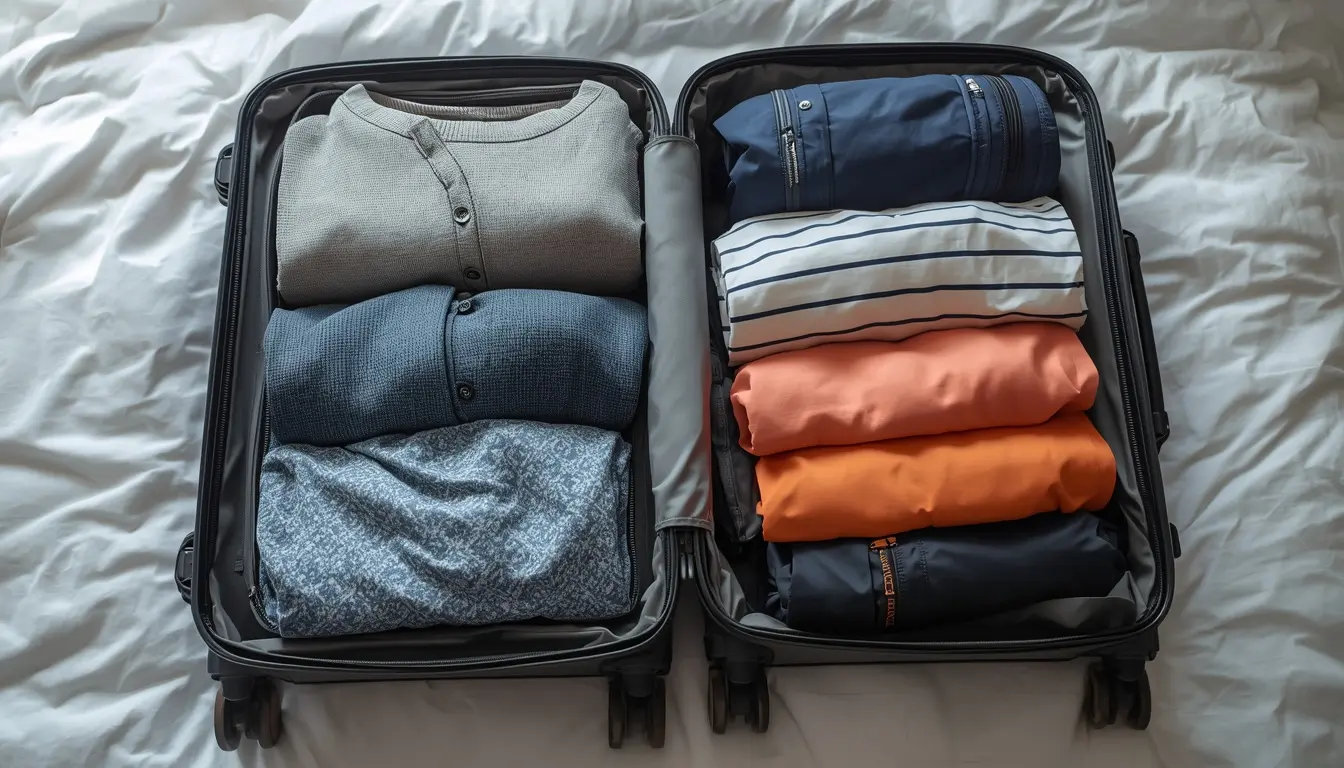
Rolling is the better default technique for lightweight, casual pieces: t-shirts, socks, underwear, casual pants, and activewear. Testing by packing specialists has found that rolled clothing takes up roughly 15 to 20 percent less space than the same items folded, and the difference is even more noticeable inside a compression style packing cube.
The technique itself is simple. Lay the item flat, fold it in half lengthwise along an existing seam if there is one, then roll tightly starting from the shorter end. Pack the rolled item with the opening facing down inside your bag or cube, which helps it hold its shape rather than unrolling loosely during transit.
Folding Still Wins for Structured Pieces
Dress shirts, blazers, and anything made from a stiffer or more structured fabric generally hold up better when folded rather than rolled. Rolling a button up shirt or a blazer tends to introduce creases along the roll itself that are harder to shake out than a traditional fold line, particularly for fabrics that do not bounce back easily.
For a dress shirt specifically, button it completely before folding to help it maintain its shape throughout the trip. For delicate fabrics like silk or fine linen, folding with a layer of tissue paper between the folds adds meaningful protection against creasing, and packing these items toward the top of your bag means they come out last and get handled the least.

The Bundle Method for Mixed Trip Packing
For trips that mix casual days with a dressier event or two, the bundle method solves a specific problem that pure rolling or folding does not: keeping full outfits together and easy to grab. Rather than packing by category, you pack by outfit. Start by laying your smaller items, socks and underwear, in the center of a flat surface, then wrap a shirt around them, followed by pants wrapped around that same core. The result is a single compact bundle containing one complete outfit, which is particularly useful if you are moving between destinations frequently and do not want to dig through unrelated items just to find a matching top and bottom.
Packing Cubes Are Worth the Small Investment
Packing cubes do two jobs at once: they compress your clothing into a smaller footprint, and they keep everything organized well enough that you are not unpacking the entire bag just to find one item near the bottom.
Compression cubes squeeze items down further than standard cubes, but that added pressure does introduce more wrinkling, which makes them a better fit for casual, rolled items than for structured or delicate pieces. Standard, non-compression cubes are the safer choice for folded dress shirts or anything you do not want creased. Many experienced packers use a mix: compression cubes for rolled casual wear, and a regular cube reserved for anything folded or delicate.
Layer Your Bag With Weight in Mind
Once you know which items are rolled, folded, or bundled, the order you load them into your carry-on still matters. Place your heaviest items, shoes and any bulkier layers, at the bottom of the bag. This keeps the bag balanced and prevents heavier objects from crushing more delicate items packed above them. Save your most delicate or frequently needed pieces for the top layer, since that is what you will reach first without needing to unpack everything else.
Choose a Wardrobe That Was Built to Pack Light
Even the best packing technique struggles against a wardrobe that was not chosen with travel in mind. Before you start folding or rolling anything, pick pieces that mix and match easily within a single, limited color palette. A handful of coordinating tops and bottoms that can be combined into several different outfits will always pack smaller and more efficiently than an equal number of pieces that only work with one specific matching item.
A Quick Pre-Departure List
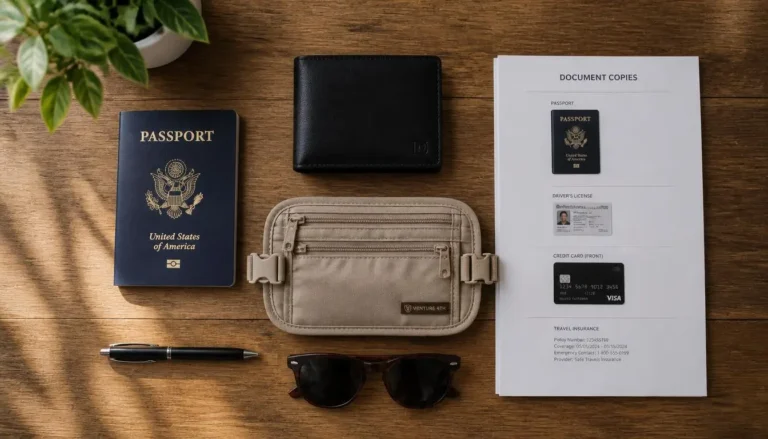
A short list drafted before you start packing prevents both the common mistakes: overpacking out of anxiety, and forgetting something essential in the rush to zip the bag closed. Before you begin, jot down what you actually need by category, clothing, toiletries, electronics and chargers, and any documents, then pack against that list rather than packing on instinct alone.
If you are also checking a larger bag for the same trip, it is worth keeping a full change of clothes, any essential medication, and your chargers in your carry-on regardless. Checked luggage occasionally gets delayed or misrouted, and having the essentials with you removes what would otherwise be a genuinely stressful start to a trip.